
Podcast: Play in new window | Download
Subscribe: Apple Podcasts | RSS
 The archaeological site of Tula, nestled in the state of Hidalgo, Mexico, stands as a testament to the ingenuity and power of the Toltec civilization. Often overshadowed by the grandeur of Teotihuacan or the mystique of Chichen Itza, Tula—known anciently as Tollan—served as the epicenter of a formidable empire that bridged the Classic and Postclassic periods of Mesoamerican history. Flourishing between approximately 900 and 1150 AD, Tula was a hub of political, economic, and cultural influence, shaping the trajectory of civilizations that followed, including the Aztecs who revered it as a legendary capital. To understand the site’s significance, one must delve into its historical context, architectural marvels, and the societal structures that defined the Toltecs. Yet, beyond the well-documented ruins visible above ground, whispers of underground discoveries—crystal spheres, enigmatic symbols, and artifacts defying conventional explanation—have fueled fringe theories that challenge mainstream archaeology. This episode of Mexico Unexplained begins with the agreed-upon mainstream historical overview before venturing into the speculative realms that have captivated alternative historians and conspiracy enthusiasts – or, “pattern recognition specialist” alike.
Tula’s origins trace back to the waning days of the Classic period, around the 8th century AD, when the central Mexican powerhouse of Teotihuacan began to decline. Migrants from the north, possibly influenced by Teotihuacan’s remnants, settled in the Tula region, establishing what would become a very powerful regional center. Archaeological evidence suggests that Tula emerged as a consolidation of smaller cities and kingdoms, uniting under a structured centralized authority that emphasized militarism, trade, and ritual. The site’s chronology is divided into three phases. The first is called the Early Corral phase which lasted from about 900 to 1000 AD and is marked by initial urban development. The next phase is the Late Corral Phase dating from about 1000 to 1100 AD, when Tula reached its zenith and controlled much of central Mexico. The third and last phase is appropriately named the Terminal Corral phase. This period of decline led to Tula’s eventual abandonment around 1150 AD. Archaeologists and historians are not sure how Tula and the Toltec civilization collapsed, but theories revolve around internal strife, environmental pressures, and invasions.
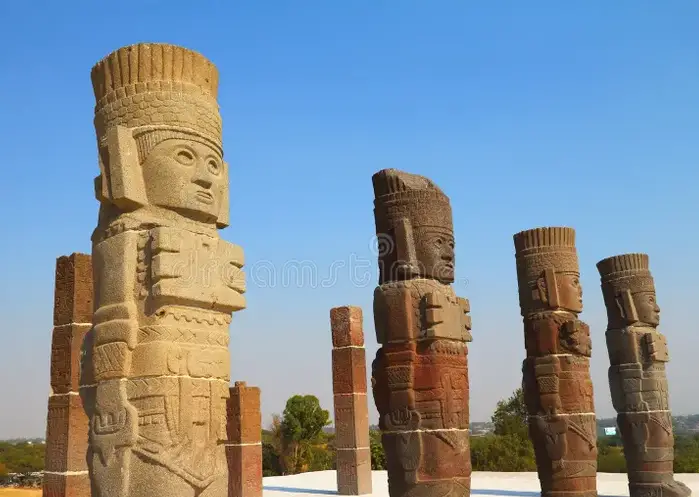
At its peak, Tula sprawled over more than 6 square miles, housing a population of up to 60,000 inhabitants. The city’s layout showed sophisticated urban planning, with a central civic-ceremonial precinct dominating the landscape. This sacred area, often called Tula Grande, featured monumental structures that symbolized Toltec cosmology and authority. Pyramid B, the most iconic building, rises imposingly with its stepped platforms and atop it stand the famous Atlantean figures discussed in Mexico Unexplained episode 38 https://www.youtube.com/watch?v=1O04nLKuZu8. These colossal basalt warriors, each nearly 15 feet tall are clad in feathered headdresses, don butterfly pectorals, and are holding spear-throwers called atlatls. These statues, discovered buried in the 1940s by archaeologist Jorge Acosta, were not mere decorations; they supported the roof of a temple dedicated to Tlahuizcalpantecuhtli, the morning star aspect of Venus, underscoring the Toltecs’ astronomical prowess and warrior spirit.
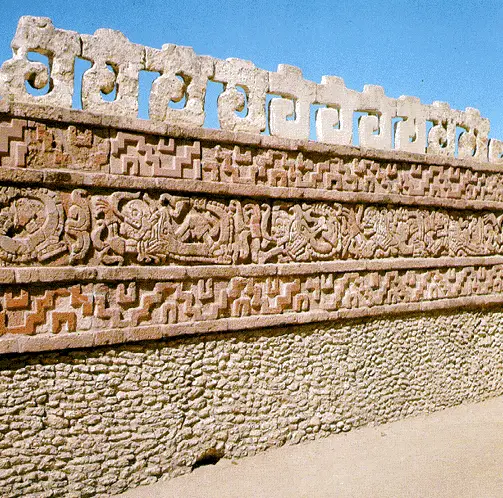 Adjacent to Pyramid B is the Coatepantli, or “Serpent Wall,” a freestanding frieze adorned with carvings of serpents devouring skeletal figures, evoking themes of sacrifice and renewal. Pyramid C, the largest structure, though less excavated, likely served as a focal point for rituals. The site’s ball courts, highlight the ritualistic ballgame, a Mesoamerican staple linking sport, warfare, and cosmology discussed in Mexico Unexplained episode number 53 https://youtu.be/DsHZFf6_bmo . Residential areas surrounding the precinct reveal a stratified society: elite compounds with plastered floors and intricate murals contrasted with simpler adobe dwellings for commoners. Artifacts like ceramic vessels, obsidian tools, and imported turquoise underscore Tula’s extensive trade networks, reaching as far as the Pacific coast and what is now the American Southwest.
The Toltecs’ influence extended beyond architecture. They pioneered stylistic elements that permeated Postclassic Mesoamerica, including the chacmool—a reclining figure used for offerings—and the tzompantli skull racks. Ethnohistorical sources, such as the Aztec codices, portray Tollan as a utopian realm ruled by the priest-king Quetzalcoatl, blending myth with history. Quetzalcoatl’s exile and promised return became a motif echoed in later cultures. Recent excavations have refined our understanding: starfish remains found in offerings link Tula to Pacific trade routes, while skeletal evidence suggests child sacrifices, revealing a darker side to Toltec rituals. Environmental studies indicate that overexploitation of resources, like deforestation for lime production, contributed to the city’s fall, paving the way for Aztec dominance.
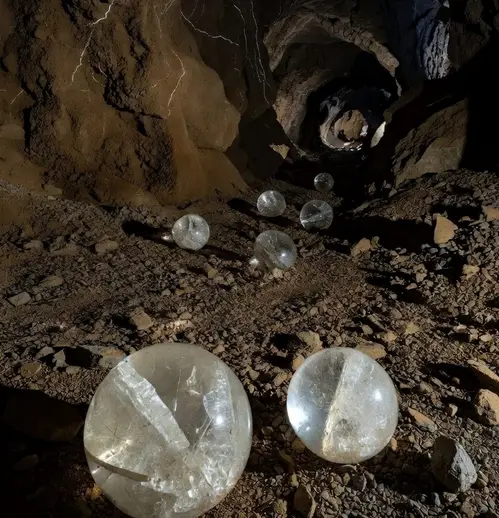
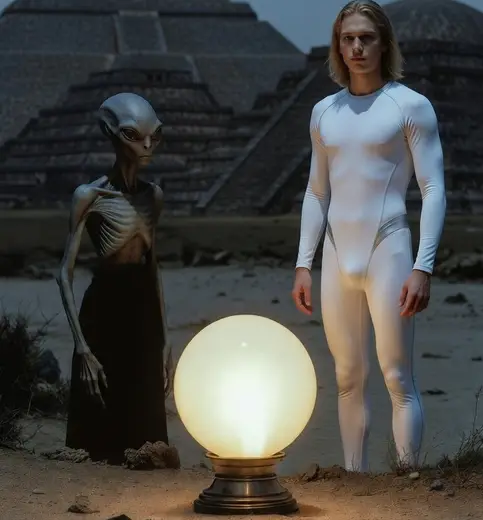 Despite these insights, Tula’s history is not without many gaps that are often filled in with speculation or fringe theories. Much of the site remains unexcavated, buried under layers of volcanic ash and even under modern development. This incomplete picture has invited much speculation, particularly regarding what lies beneath the surface. While mainstream archaeology focuses on verifiable evidence, fringe narratives propose that Tula harbors secrets of advanced ancient technologies and extraterrestrial influences. These theories, often disseminated through social media and alternative history channels, center on alleged underground chambers revealing artifacts that purportedly rewrite human history such as crystal spheres, metallic vessels, and assorted cryptic symbols. Transitioning to these fringe perspectives, one encounters a tapestry of claims blending archaeology with pseudoscience. Reports from the early 21st century onward describe excavations beneath Tula’s pyramids uncovering sealed chambers filled with anomalous objects. Among the most intriguing are the so-called crystal spheres: translucent orbs, sometimes described as glowing under certain lights, etched with geometric patterns or symbols resembling ancient scripts. Proponents argue these spheres are not mere decorative items but remnants of lost technology, possibly energy devices or communication tools. Drawing parallels to crystal skulls found elsewhere in Mesoamerica, theorists posit that the Toltecs possessed knowledge of quartz’s piezoelectric properties, harnessing the stone for healing, divination, or some say, even interstellar signaling.
Enigmatic symbols carved into chamber walls amplify the mystery. Descriptions vary, but common motifs include circular glyphs, floating cubes, repeating eye patterns, and cuneiform-like inscriptions. Some interpret these as star maps aligning with constellations like the Pleiades, suggesting Toltec astronomers charted celestial events with unprecedented precision. Others link them to Sumerian or Egyptian iconography, fueling diffusionist theories of ancient transoceanic contact. Fringe authors speculate these symbols encode forbidden knowledge, perhaps even instructions for geopolymer construction, methods using advanced concrete-like materials that explain Tula’s durable structures without modern tools.
 Metallic vessels and geopolymer artifacts add another layer. Alleged finds include seamless alloy containers defying pre-Columbian metallurgy, containing residues of unknown compounds. Geopolymers, supposedly used in pyramid bases, are cited as evidence of expertise in alchemy, blending natural resins with volcanic ash to create indestructible bonds. These claims often tie into Anunnaki narratives, popularized by authors like Zecharia Sitchin, portraying the Toltecs as descendants or pupils of ancient astronauts from Nibiru. The Anunnaki, according to this view, imparted technologies for manipulating energy fields, with crystal spheres serving as “power cores” for levitation or anti-gravity devices. Such theories gained traction through viral social media posts and videos, particularly around 2025–2026, when social media accounts like Ancient Explorers and Alien Carvings shared footage of purported digs. One narrative describes a sarcophagus unearthed beneath Pyramid B, containing elongated skulls and crystal artifacts, echoing Peruvian Paracas finds. Skeptics dismiss these as hoaxes, pointing to doctored images and lack of official verification from Mexico’s National Institute of Anthropology and History. Yet, proponents counter that mainstream suppression—due to paradigm-shifting implications—keeps these discoveries hidden, much like alleged cover-ups at Teotihuacan, where golden spheres were found in tunnels.
The Teotihuacan parallel is telling. In 2013, archaeologists discovered hundreds of clay-cored, jarosite-coated orbs beneath the Temple of the Feathered Serpent, puzzling experts with their purpose. Fringe interpreters reframe these as “golden spheres” for ritual or technological use, and similar claims have migrated to Tula discussions, blurring the differences between sites online. This conflation underscores how misinformation spreads, transforming genuine anomalies into extraterrestrial evidence.
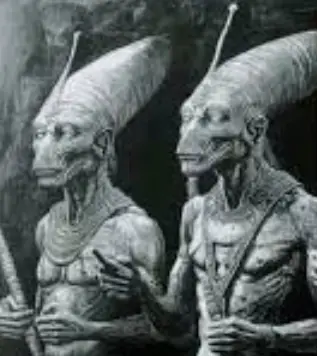 Many alternative researchers do not even go underground but remain fixated on what’s on the surface for all to see. The gigantic Atlantean figures previously discussed are frequently interpreted as being ancient astronauts complete with jet packs, life support systems and laser beam weapons. Feathered serpent motifs throughout Tula often foster speculation of dragons or reptilian visitors from Alpha Draconis.
Exploring deeper, though, some theories connect Tula’s underground mysteries to global ley lines or energy grids. The site’s location near volcanic zones is said to amplify geomagnetic fields, making it a “portal” for interdimensional travel. Crystal spheres, in this context, act as resonators which serve to tune into Earth’s frequencies for shamanic visions or alien contact. Reports of UFO sightings over Tula bolster this, with orbs resembling the Buga Sphere—a metallic artifact from Colombia studied in Mexico—linked to Toltec lore.
Critics argue these fringe ideas stem from cultural appropriation, lack of education and sensationalism, ignoring Toltec achievements in favor of alien intervention. Nonetheless, they highlight archaeology’s limitations: with only a fraction of Tula excavated, future digs could reveal surprises. Recent finds, like a 1,300-year-old pyramid reburied for preservation, remind us that the past often resurfaces unexpectedly.
In conclusion, Tula embodies the duality of history. The site is rooted in empirical evidence yet so much is unknown that it lends itself to the imagination. From its Toltec foundations to speculative depths, this curious “lost city” invites reflection on what we know and what remains buried.
REFERENCES