
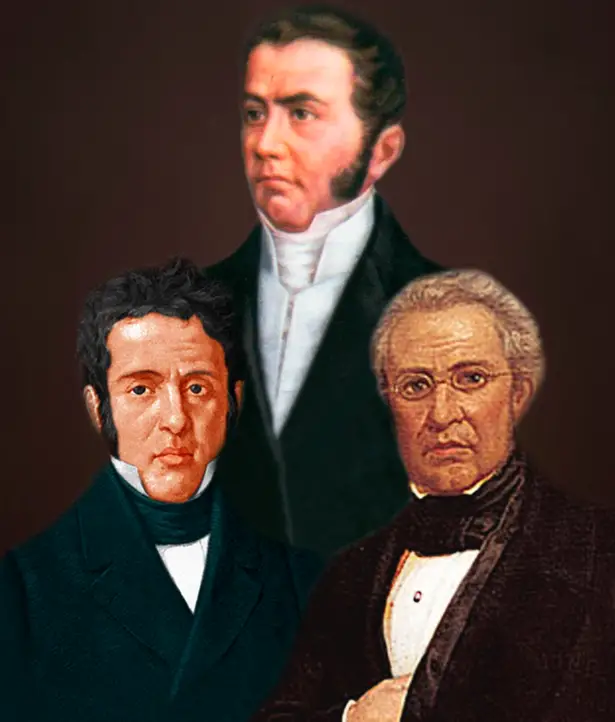
 In the volatile first decade of independent Mexico, few episodes capture the nation’s precarious grip on stability quite like the eight-day Triumvirate of December 1829. From December 23 to December 31, a three-man executive council—Pedro Vélez, Lucas Alamán, and Luis Quintanar—held supreme power in the republic. Far from a revolutionary junta or a bold dictatorship, this brief governing body was a constitutional stopgap, engineered to lend legitimacy to a military coup while preventing outright anarchy in the capital. Its fleeting existence reveals the razor-thin line between order and collapse in early republican Mexico.
The seeds of this crisis were planted in Mexico’s long struggle for independence and the troubled birth of the federal republic. After Agustín de Iturbide’s empire fell in 1823, a provisional government comprised of 6 men steered the country toward the Constitution of 1824, which established a federal system inspired by the United States but shaped by Mexico’s deep regional divisions. Mexico’s first President – Guadalupe Victoria – who served from 1824 to 1829, managed to complete his term, which was a rare feat, but he governed a nation plagued by empty treasuries, unpaid armies, smuggling, foreign debt, and the expulsion of Spaniards that disrupted commerce and administration. Beneath this fragile surface, ideological and personal rivalries festered. The two major political movements had origins in worldwide Freemasonry, which had been established decades earlier as discussed in Mexico Unexplained episode number 409 https://youtu.be/pAjsJAP32HU Federalist-leaning Yorkinos, based on the York Rite version of Freemasonry were often more inclusive of mestizo and Indigenous 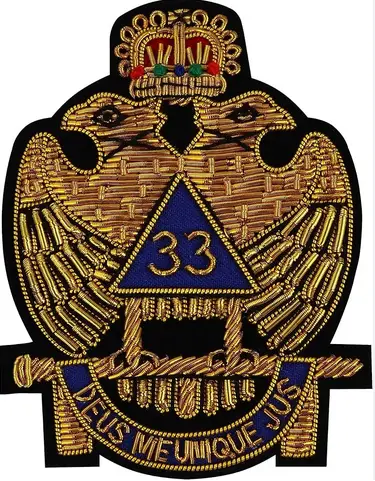 leaders. The Yorkinos clashed with conservative Escoceses – based on Scottish Rite freemasonry – who favored a stronger central government and traditional hierarchies. The 1828 presidential election ignited the powder keg. Moderate Manuel Gómez Pedraza won through the state legislatures’ electoral college. The second-place finisher was Vicente Guerrero, the independence hero who had fought tirelessly in the south. Radical Yorkinos and ambitious generals, including Antonio López de Santa Anna, alleged fraud. Street riots erupted in Mexico City, and Santa Anna proclaimed the Plan de Perote, nullifying the election’s results.
Under intense military and popular pressure, Congress reversed course and declared Guerrero the victor. On April 1, 1829, he took office as the second president, with conservative General Anastasio Bustamante as vice president. This was a mismatched ticket meant to balance factions. Guerrero moved quickly to fulfill the revolutionary promises he fought for, but a few months into his presidency, in July of 1829, Spain launched its last attempt at trying to reconquer its former colony of New Spain. Spanish Brigadier Isidro Barradas landed 3,000 troops at Tampico. Guerrero assumed emergency powers with congressional approval, mobilized the nation, and sent forces under Santa Anna. The invaders were defeated by September, thanks to disease, local resistance, and Mexican tenacity. The victory at Tampico briefly unified the country and boosted Guerrero’s standing. Emboldened, Guerrero issued one of the most radical decrees in Mexican history: on September 15, 1829, he abolished slavery throughout the republic with temporary exemptions for Texas 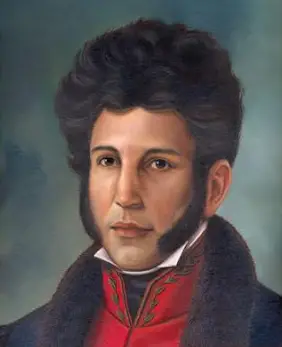 planters. The measure fulfilled long-standing insurgent ideals of equality and made Mexico—after Haiti—the second nation in the Americas to end legal slavery outright. Vicente Guerrero also promoted public education, land distribution to the poor, industrial incentives, and protections for Indigenous and mixed-race communities. To ordinary Mexicans, especially in the south, these steps represented genuine hope for social justice. To Mexico City’s elites of European descent, military traditionalists, and conservative intellectuals, however, they signaled dangerous leveling and chaos. Guerrero’s humble origins and Indigenous and African ancestry fueled racist whispers. His retention of emergency powers after the Spanish threat subsided gave critics the pretext they needed.
The counterstrike came on December 4, 1829. Vice President Bustamante, stationed with reserve troops in Xalapa, Veracruz, issued the Plan de Jalapa. The manifesto accused Guerrero of dictatorship, demanded the restoration of constitutional rule, and called for new leadership. It was a textbook pronunciamiento; the military declaration that became the preferred tool for changing governments in nineteenth-century Mexico. Guerrero, still the soldier at heart, obtained congressional permission to take the field personally. He left the capital around December 16 to rally loyalists in the Tierra Caliente and Costa Grande regions. His departure left Mexico City dangerously exposed. Congress named José María Bocanegra—president of the Supreme Court of Justice and a respected moderate—as interim president. Bocanegra lasted only six days. On December 23, the capital’s garrison mutinied. Soldiers embraced the Plan de Jalapa, stormed the National Palace, and forced Bocanegra’s resignation.
Rather than install a single military strongman, the rebels invoked Article 97 of the 1824 Constitution, which authorized a council of government during executive vacancies. They formed what is now known in Mexican history as the Triumvirate. It included Supreme Court President Pedro Vélez, a prominent conservative statesman and historian named Lucas Alamán, and Luis Quintanar who served as a division general and was a Bustamante loyalist. Each brought something essential. Vélez, a lawyer from the state of Zacatecas, symbolized judicial continuity. Quintanar provided the military credibility needed to keep the army in line. Alamán, who was the philosophical and intellectual force behind Mexican conservatism, offered administrative expertise and ideological direction. Together they represented a careful blend of legality, force, and elite interests. For eight days the Triumvirate governed from the National Palace. Their mandate was deliberately narrow: preserve public order, conduct routine administration, and hold the capital until Bustamante could arrive from the east. They issued proclamations reaffirming loyalty to the Constitution, suppressed minor disturbances in the city, and coordinated with regional commanders to prevent Guerrero’s southern forces from mounting a counteroffensive. No major laws or reforms emerged from the brief reign of these three men. Vélez oversaw legal matters, Quintanar secured military loyalty, and Alamán handled day-to-day governance. Their brevity was by design; they were a bridge, not a destination.
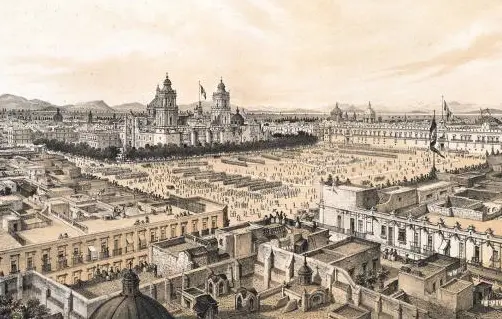 On December 31, 1829, with Bustamante’s troops in control and the capital pacified, the Triumvirate formally stepped down. Bustamante assumed the presidency on January 1, 1830. Congress quickly ratified the Jalapa plan, declared Guerrero’s continued claim invalid, and confirmed the conservative takeover. The eight-day interregnum had fulfilled its purpose perfectly: it clothed a basic barracks revolt in constitutional garb.
The consequences of the Triumvirate were profound and tragic. Bustamante’s administration, which lasted from 1830 to 1832, shifted policy sharply rightward. Lucas Alamán, appointed as a powerful minister, pursued centralist, protectionist, and elite-friendly measures. In 1831, Guerrero—betrayed by a mercenary captain near Acapulco—was captured, tried by a kangaroo court-martial, and executed by firing squad in Cuilapan, Oaxaca, on February 14. The killing of the independence hero and abolitionist turned him into a martyr and inflamed liberal and regional opposition for decades. The episode accelerated Mexico’s slide into chronic instability. Military pronouncements became routine. Federalism eroded, culminating in the 1835 shift to a centralist republic under the Seven Laws. Santa Anna’s erratic rule, the Texas Revolution, and the looming war with the United States lay ahead.
The 8-Day Triumvirate remains one of Mexican history’s strangest footnotes; a shadow government born of desperation, sustained by legal fiction, which vanished almost before it could register. In those eight tense days, the republic laid bare its fundamental truth: in early independent Mexico, power rested not on popular will or enduring institutions, but on the shifting allegiance of bayonets and the fragile pretense of legality.
REFERENCES