
Podcast: Play in new window | Download
Subscribe: Apple Podcasts | RSS
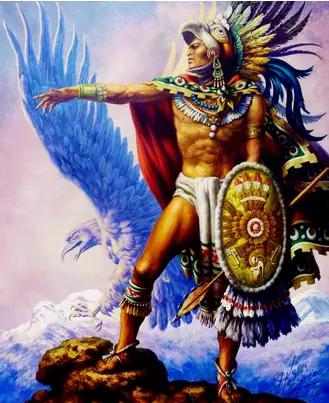 Cuauhtémoc, whose name in Nahuatl translates to “Descending Eagle,” stands as one of the most enduring figures in Mexican history. Born around 1495-1500 in the heart of the Aztec Empire at Tenochtitlan, he ascended to the throne as the 11th and final tlatoani, or ruler, of the empire in 1520. His brief reign, marked by desperate resistance against the Spanish conquistadors led by Hernán Cortés, encapsulated the tragic fall of one of the world’s most sophisticated pre-Columbian civilizations. As the nephew and son-in-law of the famed Montezuma II, Cuauhtémoc inherited a crumbling empire ravaged by internal strife, foreign invasion, and a devastating smallpox epidemic. The Aztec Empire – or the Triple Alliance of Tenochtitlan, Texcoco, and Tlacopan – had reached its zenith under rulers like Ahuitzotl, Cuauhtémoc’s father, expanding through military conquests and intricate tribute systems. By the time Cuauhtémoc took power, however, the arrival of Cortés in 1519 had shattered this dominance. Montezuma’s initial hospitality toward the Spaniards led to his captivity and eventual death in 1520. His successor, Cuitláhuac, organized a brief resurgence but succumbed to smallpox within months. Cuauhtémoc, a young warrior in his mid-20s, was elected by the noble council for his proven military prowess and lineage. His story is not merely one of defeat but of unyielding defiance. Captured in 1521 after a grueling siege that reduced Tenochtitlan to ruins, Cuauhtémoc endured torture, exile, and execution in 1525. Yet, his legacy transcends his lifetime, evolving into a potent symbol of indigenous resistance and Mexican nationalism. In modern Mexico, Cuauhtémoc is commemorated through monuments, currency, and cultural icons, representing the indomitable spirit of the indigenous against colonial oppression. This episode of Mexico Unexplained delves into his life, reign, and enduring impact, drawing from historical accounts like those of Bernal Díaz del Castillo and contemporary scholarship.
Historians debate the exact details of his biography due to the scarcity of pre-conquest records. Much of Aztec history was oral or recorded in codices destroyed by the Spanish. Spanish chroniclers like Cortés and Díaz provided biased narratives, portraying Cuauhtémoc as a brave but barbaric foe, while indigenous sources, such as those compiled by Fernando de Alva Ixtlilxóchitl, offer a more nuanced view of his heroism. His name, evoking an eagle’s predatory dive, aptly symbolized his aggressive defense strategies. As we explore his early years, rise to power, the epic siege, capture, death, and legacy, Cuauhtémoc emerges not just as a historical figure but as a bridge between ancient Mesoamerica and contemporary identity.
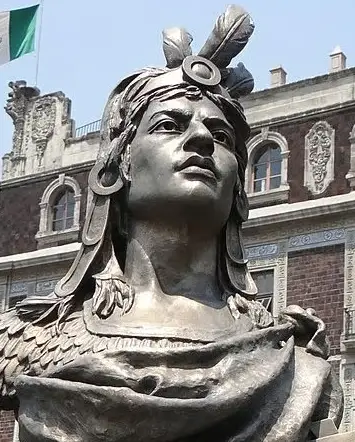 Cuauhtémoc’s early life is shrouded in mystery, with few direct records surviving from before his ascension. Born circa 1495-1500 in Tenochtitlan, the bustling island-city at the center of Lake Texcoco, he was the eldest legitimate son of Emperor Ahuitzotl, the eighth tlatoani who ruled from 1486 to 1502. Ahuitzotl was renowned for his military expansions, conquering vast territories and overseeing the grand dedication of the Templo Mayor in 1487, where thousands were sacrificed to appease the gods. Cuauhtémoc’s mother is believed to have been Princess Izelcoatzin, possibly from Tlatelolco, a neighboring altepetl or city-state that was integrated into the empire. This noble lineage positioned him within the pipiltin class, the Aztec aristocracy destined for leadership roles.
As a child of the elite, Cuauhtémoc would have been educated in the calmecac, a rigorous school for noble boys attached to temples. Here, young Aztecs learned astronomy, rhetoric, warfare, and religious rituals under priestly supervision. Discipline was harsh, emphasizing fasting, self-sacrifice – like bloodletting with maguey thorns – and moral codes tied to the gods, particularly Huitzilopochtli, the patron deity of the empire. By adolescence, Cuauhtémoc transitioned to military training, essential for any aspiring leader. Aztec society valorized warriors; capturing enemies for sacrifice was a path to social advancement. Historical inferences suggest he excelled, as by 1515, at around age 20, he was appointed cuauhtlatoani or “eagle ruler” of Tlatelolco, a prestigious title requiring proven battlefield captures.
This role in Tlatelolco, once a rival to Tenochtitlan but subdued in 1473, involved governing and military command. It was during this period that Cuauhtémoc married a princess later baptized as Isabel Montezuma, daughter of Montezuma II, strengthening his ties to the imperial family. The marriage was politically strategic, blending lineages and solidifying alliances within the Triple Alliance. He may have participated in key ceremonies, such as the New Fire ritual in 1507, which renewed the 52-year calendar cycle and averted cosmic catastrophe. Life in Tenochtitlan was vibrant: canals teemed with canoes, markets bustled with goods from cacao to feathers, and the city’s pyramids loomed as symbols of divine favor. Yet, omens foreshadowed turmoil. Aztec lore spoke of prophecies: comets, temple fires, and Montezuma’s visions of bearded strangers from the east. Cuauhtémoc, as a young noble, likely witnessed the empire’s peak under Montezuma II, who expanded tribute networks but faced rebellions from subjugated peoples. The arrival of Cortés in 1519 disrupted this world. Initially, Cuauhtémoc’s role was peripheral; he served as a military advisor. But the massacre at the Toxcatl festival in 1520, where Spaniards slaughtered unarmed nobles, thrust him into the fray. This event, amid Montezuma’s captivity, ignited the Noche Triste, where Aztecs routed the invaders, drowning many in the lake under loads of looted gold. Cuauhtémoc’s early experiences forged a resolute character. Unlike Montezuma’s hesitancy, he embodied the warrior ethos, prepared to fight to the death. Sources like Díaz del Castillo describe him as tall, fair-skinned and with a commanding presence. His upbringing in a society where human sacrifice maintained cosmic balance may have instilled a fatalistic determination, viewing defeat as part of the gods’ will yet demanding heroic resistance.
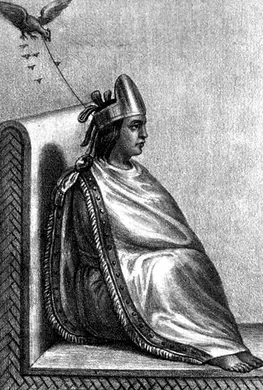 Cuauhtémoc’s rise to tlatoani occurred amid catastrophe. Following Montezuma’s death in June 1520—likely from wounds inflicted by his own people during a failed appeasement speech—Cuitláhuac, Montezuma’s brother, was elected ruler. Cuitláhuac swiftly organized the expulsion of the Spaniards on the Noche Triste – June 30, 1520 – where Cortés lost half his force. However, victory was pyrrhic; smallpox ravaged the city, killing Cuitláhuac after just 80 days in power. In this vacuum, the noble council convened to select a new tlatoani. Traditional Aztec succession wasn’t strictly hereditary but elective among high-born males with military merit. Cuauhtémoc, as Montezuma’s nephew and a proven commander, emerged as the consensus choice. At approximately 25 years old, he was young but experienced, having led forces in Tlatelolco. His coronation on January 25, 1521, was subdued, overshadowed by the siege preparations. The empire was fracturing: allied city-states like Tlaxcala defected to Cortés, enticed by promises of autonomy and revenge against Aztec dominance.
Upon ascending, Cuauhtémoc faced immediate challenges. Tenochtitlan, with its 200,000 to 300,000 inhabitants, was isolated, its causeways cut by the Spanish. He rallied the remaining captains, fortifying the city with barricades and stockpiling food. Women and children joined the defense, hurling stones from rooftops. Cuauhtémoc appealed to countryside allies for reinforcements, but responses were tepid; only Tlatelolco remained staunchly loyal. The smallpox epidemic had decimated the population, weakening morale and manpower. His leadership style was decisive and inspirational. Unlike Montezuma’s diplomacy, Cuauhtémoc pursued total war, executing spies and motivating warriors with speeches invoking ancestral glory. He reorganized the military, emphasizing guerrilla tactics on the lake and urban combat. Yet, the technological disparity—Spanish cannons, crossbows, and horses versus Aztec obsidian-edged clubs and spear-throwers—proved insurmountable. Cortés, reinforced by fresh troops and thousands of indigenous auxiliaries, encircled the city by May 1521. Cuauhtémoc’s ascension marked the empire’s final stand. He symbolized continuity, invoking the gods for victory while pragmatically adapting to siege warfare. Historical accounts praise his valor; even Cortés admired his tenacity in letters to King Charles V. This period solidified Cuauhtémoc’s image as a tragic hero, fighting not just for power but for cultural survival.
The siege of Tenochtitlan, lasting from May to August 1521, was one of history’s most brutal urban conflicts. Cuauhtémoc orchestrated a masterful defense, transforming the city into a fortress. With causeways severed, supplies came via canoe under cover of night. He divided the city into districts, each under a captain, coordinating attacks on Spanish positions. Early successes included ambushing Spanish ships on the lake and capturing soldiers for sacrifice atop the Templo Mayor, boosting morale.
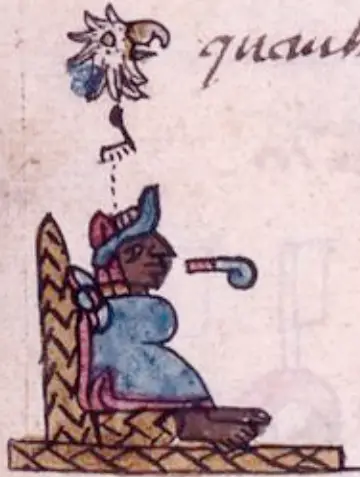 The Spanish strategy was attrition: blockading food, demolishing buildings with artillery, and advancing street by street. Cortés’s allies, numbering over 100,000, filled canals with rubble to enable cavalry charges. Famine gripped the city; residents resorted to eating lizards, bark, and even adobe. Smallpox continued its toll, bodies piling in streets. Cuauhtémoc, undeterred, led sorties personally, wielding his obsidian blade club in fierce melees. One notable battle saw Aztecs nearly capture Cortés, only thwarted by his guards. As weeks dragged, desperation mounted. Women fought alongside men, using slings and clubs. Cuauhtémoc executed deserters to maintain discipline. By July, Tlatelolco became the last redoubt, with survivors fleeing there. The final assault on August 13, 1521, broke through; Cuauhtémoc attempted escape by canoe with nobles and family, but was intercepted by Spanish vessels. The siege’s human cost was staggering: tens of thousands dead, the city razed. Spanish sources claim 100,000 Aztec fatalities; indigenous accounts, like those in the Florentine Codex, describe rivers of blood and pyramids of skulls. Cuauhtémoc’s tactics delayed the inevitable, earning respect from foes. Díaz del Castillo recounted his bravery: “He fought like a lion.” This episode highlighted Aztec resilience, challenging Eurocentric narratives of easy conquest.
Post-siege, Cuauhtémoc surrendered formally, reportedly saying to Cortés: “I have done all that was in my power to defend my people and my city.” Cortés, impressed, spared him initially, allowing survivors to leave unmolested. However, greed soon prevailed.
Captured on August 13, 1521, aboard a canoe on Lake Texcoco, Cuauhtémoc was brought before Cortés. Accompanied by his wife Tecuichpo – later known as Isabel Montezuma – and nobles, he offered his life, extending a dagger: “Take this and kill me.” Cortés refused, praising his valor and baptizing him as Fernando Cuauhtémotzín. He retained nominal tlatoani status under Spanish oversight, aiding in reconstruction.
Disappointment over meager loot led to torture. On Cortés’s orders, Cuauhtémoc and the ruler of Tlacopan named Tetlepanquetzal had their feet oiled and burned over coals to reveal hidden gold. Cuauhtémoc endured stoically; when Tetlepanquetzal begged for death, he retorted: “Do you think I am in a bed of roses?” Little treasure was found, but the episode, immortalized in paintings like Leandro Izaguirre’s “The Torture of Cuauhtémoc,” underscored Spanish brutality.
 Imprisoned but treated with some respect, Cuauhtémoc navigated colonial rule, advising on governance. Fears of rebellion persisted, leading to his inclusion in Cortés’s 1524 Honduras expedition. In 1524, Cortés embarked for Honduras to quell a mutiny by Cristóbal de Olid, taking Cuauhtémoc to prevent uprising in Mexico. The grueling march through jungles tested all. At Itzamkanac, in Chontal Maya territory, Cortés accused Cuauhtémoc of plotting assassination, based on a dubious informant’s claim. Interrogated, the lords allegedly confessed. On February 28, 1525, Cuauhtémoc was hanged from a ceiba tree, aged about 28. Accounts vary: Cortés justified it as necessary; Díaz del Castillo called it unjust, recounting Cuauhtémoc’s final words via La Malinche: “You kill me unjustly; may God demand justice.” Ixtlilxóchitl suggested it stemmed from a misunderstood joke. The execution silenced potential resistance but haunted Cortés, who reportedly suffered guilt-induced insomnia.
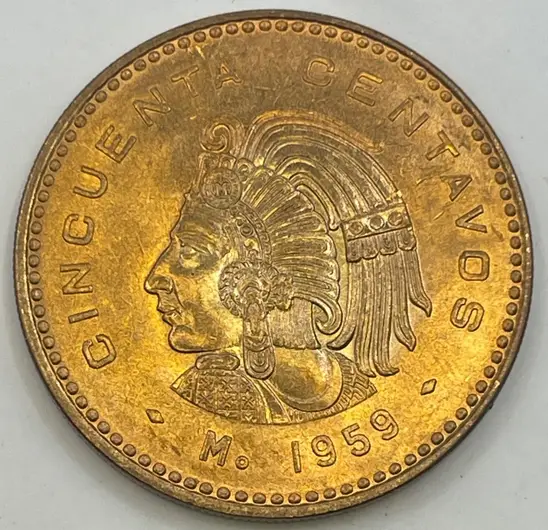
Cuauhtémoc’s legacy as the last independent Aztec ruler embodies indigenous perseverance. In post-independence Mexico, he became a nationalist icon, contrasting with Montezuma’s perceived weakness. The 1887 monument on Paseo de la Reforma, with its torture bas-relief, symbolizes resistance. His image has graced coins, banknotes, and stamps; places like Cuauhtémoc borough in Mexico City bear his name.
Cultural depictions abound: in literature, art, and media in video games like Age of Empires. Music, such as Rage Against the Machine’s lyrics, invokes his spirit. The 1949 discovery of alleged bones in Ixcateopan sparked debate; though debunked by the National Institute of Anthropology and History as a hoax, it fueled indigenist sentiments. Today, Cuauhtémoc inspires discussions on colonialism’s scars, with statues worldwide and namesakes like footballer Cuauhtémoc Blanco. His story reminds us of lost worlds and enduring defiance.
REFERENCES
Díaz del Castillo, Bernal. The True History of the Conquest of New Spain. Translated by Janet Burke and Ted Humphrey. Indianapolis: Hackett Publishing, 2012.
Townsend, Camilla. Fifth Sun: A New History of the Aztecs. New York: Oxford University Press, 2019.