
Podcast: Play in new window | Download
Subscribe: Apple Podcasts | RSS
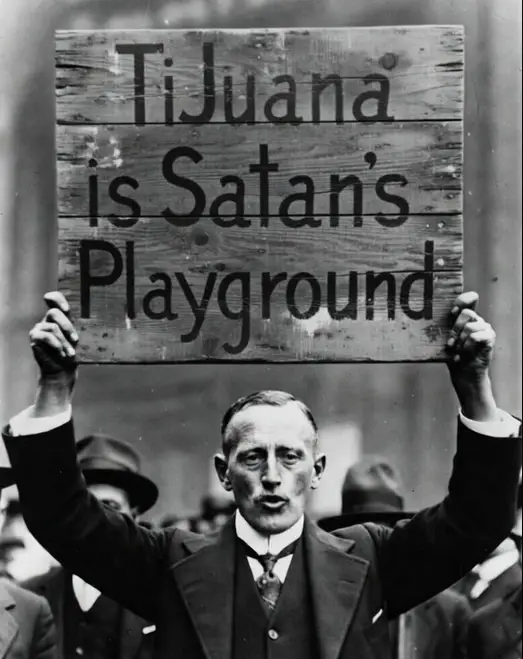 When the 18th Amendment took effect in January 1920, Americans lost their legal right to a legal drink. Saloons shuttered, speakeasies flickered to life in back alleys, and bootleggers turned the underworld into big business. But just 17 miles south of San Diego, a different story unfolded. Tijuana, Mexico—a dusty frontier outpost of roughly 1,200 people—exploded into a glittering escape hatch. Here, alcohol flowed freely, gambling wheels spun without pause, and the night never ended. What had been a sleepy border town became “Satan’s Playground,” a nickname bestowed by scandalized U.S. preachers who posted dire warnings along the road to the border. For 13 years, until Prohibition’s repeal in 1933, Tijuana thrived on America’s thirst. Mexican officials, eager for revenue after revolutionary chaos, handed concessions to American entrepreneurs shut out of their own country’s vice trades. Bars, casinos, racetracks, and brothels sprang up almost overnight. Migrants from Mexico’s interior poured in for jobs and wages far higher than at home, swelling the population to more than 12,000 by the early 1930s. Revolution Avenue, Tijuana’s main drag, transformed into a neon-lit gauntlet of temptation. Nearly 70 percent of downtown businesses eventually dealt in liquor or related entertainments.
The curious part? Tijuana wasn’t just a watering hole, it was a full-blown carnival of the forbidden. Americans crossed for what they couldn’t have at home: open drinking, high-stakes betting, horse racing, bullfights, dog fights, and bare-knuckle boxing. Day-trippers hurried back before curfews, but the serious revelers stayed until dawn. U.S. Congressman Phil Swing – a Republican from Imperial County, California – alarmed by the “debauchery,” pushed for stricter border controls. In 1924, customs officials imposed a 9 p.m. closing at the San Ysidro border crossing at San Diego. Two years later, they moved it to 6 p.m. It was one of the earliest major border enforcement drives. The rationale behind this was not to combat smuggling or migration, but to shield Americans from Tijuana’s moral corruption.
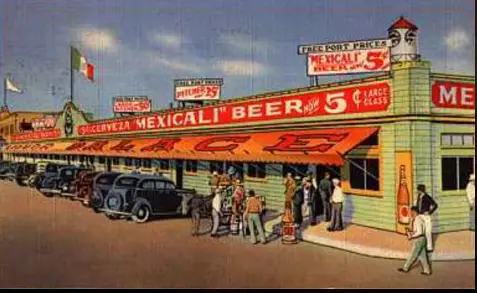
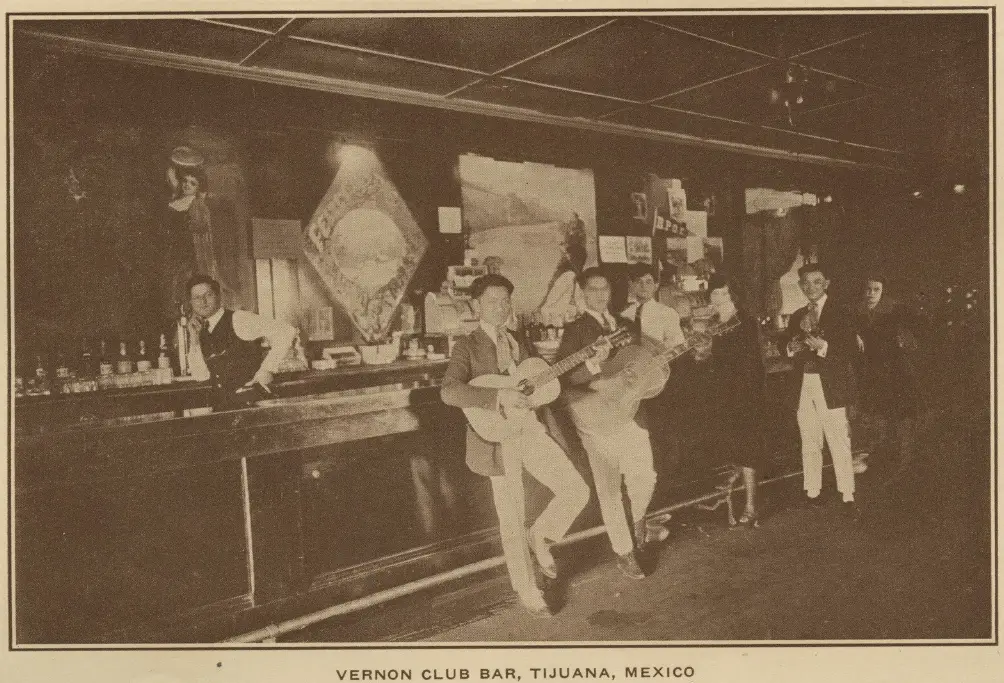 For those Americans stepping onto Revolution Avenue in the 1920s, the sensory overload hit like a shot of tequila. The air smelled of mesquite smoke, cheap perfume, and spilled beer. Music spilled from every doorway: jazz bands, mariachi, piano ragtime and throaty Mexican ballads. One establishment stood out for sheer spectacle: the Mexicali Beer Hall, nicknamed “the Longest Bar in the World.” While sources vary on the exact yardage, it supposedly stretched from 229 to 241 feet and it occupied an entire block. Bartenders slid frosty mugs of Mexicali beer down the polished surface to thirsty patrons lined up like dominoes. It burned down in the late 1940s, but during Prohibition it symbolized Tijuana’s excess: come one, come all, and drink until you can’t stand. Other venues competed for the crown of vice. The Foreign Club, Jockey Club, Sunset Inn, and El Trivoli Bar offered everything from roulette to “girly shows” and high life. Many were American-owned and staffed largely by workers from the U.S. which was an arrangement that irritated Mexican labor unions. Prostitution operated with little interference; bare-knuckle fights, dog fights and bull rings added blood sport to the menu. Hollywood types treated Tijuana like a second studio lot. Charlie Chaplin, Bing Crosby, Clark Gable, Jean Harlow, the Marx Brothers, Marlene Dietrich, and Gloria Swanson all made appearances. Jack Dempsey, the heavyweight champ, was a regular. Rita Hayworth, known as “The Love Goddess” of 1940s American cinema, was reportedly discovered dancing in one of the shows.
Perhaps the most enduring culinary curiosity emerged amid the chaos. In 1924, Italian immigrant Caesar Cardini ran a restaurant attached to his Tijuana hotel. On the 4th of July of that year, the place was packed with hungry American tourists. Prohibition had driven them south for the holiday weekend, and the kitchen was running low on supplies. Cardini improvised: he tossed romaine lettuce with olive oil, garlic, lemon juice, Worcestershire sauce, Parmesan, croutons, and coddled eggs tableside for drama. He called it the Caesar salad. It became an instant hit, later exported north when Prohibition ended. One hundred years later, the dish remains a global staple, its Tijuana birthplace often forgotten.
 If Tijuana’s Revolution Avenue was the playground of the average Joe, Agua Caliente was the playground for the rich and notorious. Opened on June 22, 1928, the $10-million resort—built around natural hot springs—rivaled Europe’s grand casinos and was often compared to the casino at Monte Carlo. Designed by 19-year-old Wayne McAllister in a flamboyant mix of Mission Revival, Art Deco, Spanish tiles, and Louis XV furniture, it boasted a 500-room hotel, Olympic-size swimming pool, Turkish steam baths, golf course, private airport, even its own radio station. The casino’s Gold Room demanded gold chips and reportedly enforced a $500 minimum bet. French chefs, Parisian floor shows, and New York orchestras kept guests entertained for entire weekends. Hollywood flocked here. Films like “In Caliente” and “The Champ” shot on location. The racetrack drew legends: in 1932, Australian champion Phar Lap won the Agua Caliente Handicap, then the world’s richest purse. Seabiscuit triumphed later. Diplomats, maharajahs, New England bluebloods and even the U.S. Secretary of the Treasury mingled with studio heads like Louis B. Mayer and Jack Warner. Gangsters came too. Al Capone’s presence remains debated—some historians call it myth—but contemporary accounts insist he visited. A former coat-check girl at Agua Caliente recalled the fuss: bodyguards, police, a crowd. Capone, she said, wore a beaver hat, sported a small scar, flirted, and tipped her $50 when reclaiming his hat. Bugsy Siegel allegedly drew inspiration here for his later Las Vegas Flamingo Hotel and Casino. Chicago, New York, and Philadelphia mobsters sniffed out the profits and demanded cuts. Crime followed the money. Less than a year after opening, gangsters ambushed the Agua Caliente “money car” hauling weekend receipts north along the Old Dike Road between National City and San Diego. Machine guns blazed—the first such attack heard in the area—killing guards. Investigators later uncovered a wilder plot: some Agua Caliente owners allegedly schemed to rob their own resort, blow it up for insurance, and flee to Florida. The plan fizzled, but it underscored the era’s blend of glamour and gangster audacity.
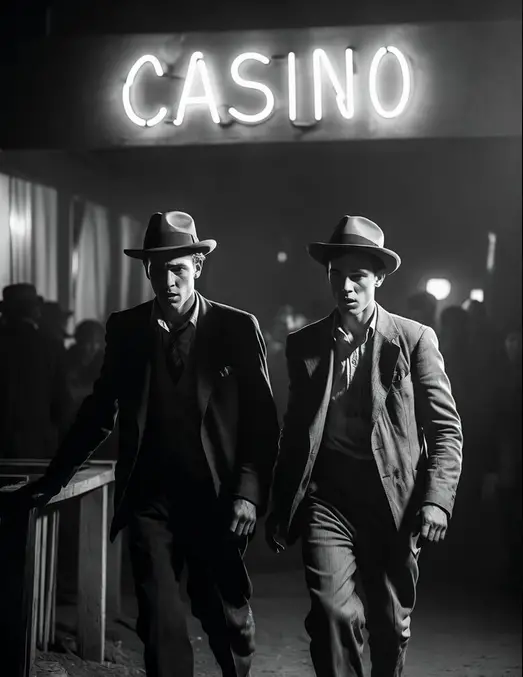 While most visitors simply drank and gambled, a shadow economy thrived. Bootleggers used Tijuana as a staging ground for smuggling runs north, whether by land, sea, or even rumored tunnels. American vice entrepreneurs, displaced by U.S. laws, partnered with Mexican officials. Baja California Territorial Governor Abelardo L. Rodríguez – who later became Mexico’s president – profited handsomely; critics claimed he funneled taxpayer money into the resort. Yet, the never-ending party had costs. Mexican workers resented American dominance of the best jobs. Labor tensions simmered. On the U.S. side, temperance groups decried Tijuana as a corrupting influence on youth. Preachers labeled it “Satan’s Playground” and warned of damnation. Families told stories of relatives who crossed for “a good time” and never quite returned the same. A border baron named James Crofton, who was a former circus pony rider turned millionaire casino owner, crashed his plane en route to meet the Mexican president, survived but never fully recovered, divorced his wife, and married a Mexican movie star. His saga embodied the era’s rags-to-riches (and back) drama.
Everything changed in 1933. The 21st Amendment ended U.S. Prohibition. Americans no longer needed to cross for a legal drink. Then, in 1935, Mexico’s new president Lázaro Cárdenas banned casino gambling nationwide. Agua Caliente’s casino and hotel shuttered. The complex became a state-run school; the racetrack limped on for decades. The golden age faded almost as quickly as it arrived. Tijuana never lost its reputation entirely, though. Post-repeal tourism continued, though the wildest excesses cooled. The minaret tower, Olympic pool, and a few bungalows still stand as quiet reminders. Today, the city’s modern identity—vibrant, resilient, and culturally rich—owes something to that Prohibition-fueled boom. In the end, Tijuana during Prohibition was more than a vice den. It was a curious laboratory of human desire: what happens when one nation’s laws create another’s golden opportunity. A longest bar where foamy beer mugs slid like destiny. A salad born of necessity that conquered the world. Gangsters in beaver hats tipping big. A resort so opulent it inspired Las Vegas itself. And a border town that, for one roaring decade, gave Americans exactly what they were told they couldn’t have.