
Podcast: Play in new window | Download
Subscribe: Apple Podcasts | RSS
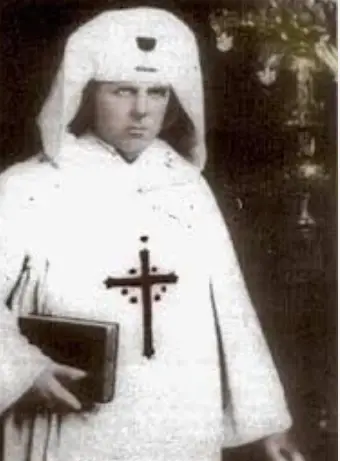 In the turbulent years of the Mexican Revolution, amid battles, political intrigue, and the reshaping of national identity, a German-born physician moved quietly through elite circles in Mexico City. Dr. Arnoldo Krumm-Heller, later known in esoteric circles as Huiracocha, combined conventional medicine with occult studies, becoming personal physician to revolutionary leader Francisco Madero while pursuing a deeper mission: blending European Rosicrucian traditions with Latin American spiritual heritage. His story offers a window into the lesser-known esoteric undercurrents of early 20th-century Mexico, where mysticism and modernity intersected in unexpected ways.
Heinrich Arnold Krumm-Heller was born on April 15, 1876, in Salchendorf, near Siegen in western Germany, the youngest of nine children in a family with mining connections. His early life included exposure to practical knowledge through his father’s work as a mining inspector. By his late teens and early twenties, he developed an interest in esoteric traditions. He traveled extensively and studied in Paris from 1907 to 1909, where he encountered figures associated with the French occult revival, including Gérard Encausse, better known as Papus, a prominent physician and occultist involved in two esoteric traditions at the time that would also influence Huiracocha: Martinism and Rosicrucianism. Martinism is a Christian mystical and esoteric tradition founded in the late 18th century by the French philosopher Louis-Claude de Saint-Martin. It emphasizes personal spiritual regeneration, the restoration of humanity’s divine connection through inner initiation, and the practice of “the Way of the Heart,” often blending Christian theology with elements of Kabbalah and theosophy while rejecting formal ritual in favor of direct mystical experience. Rosicrucianism is a philosophical and esoteric movement that emerged in early 17th-century Europe through a series of anonymous manifestos. It combines elements of Hermeticism, alchemy, Christian mysticism, and esoteric science, promoting the idea of spiritual enlightenment, hidden knowledge, and the transformation of both the individual and society through the study of nature’s hidden laws and symbolic initiation.
 Krumm-Heller, later known as Huiracocha, first arrived in Mexico around 1910, a time when the country stood on the brink of revolution against the long rule of Porfirio Díaz discussed in Mexico Unexplained episode number 380 https://youtu.be/t7aGC18O55g . He established himself as a doctor in Mexico City and quickly entered both medical and spiritualist networks. He attended spiritist congresses and became part of circles interested in blending science with metaphysical inquiry. Through these connections, he met Francisco Madero, the liberal reformer who would become president in 1911. Krumm-Heller served as Madero’s personal physician, attending to his health during a period of intense political activity. Historical accounts also place him within broader networks involving German interests in Mexico, including intelligence activities during the Revolution and World War I, though his primary public role remained that of physician and later military doctor supporting constitutionalist forces under Venustiano Carranza.
During the revolutionary years, Krumm-Heller balanced medical duties with diplomatic and propagandistic efforts. He authored accounts of his experiences, such as the German language booklet Für Freiheit und Recht – For Freedom and Right – which detailed events from the Mexican civil conflict and expressed support for the constitutionalist cause. He undertook missions on behalf of Carranza, including diplomatic journeys to Texas and South America. These activities occurred against the backdrop of foreign powers—Germany, the United States, and others—maneuvering for influence in Mexico. Krumm-Heller’s German origins occasionally drew scrutiny, yet his medical expertise and connections provided a degree of protection. After Madero’s assassination in 1913 and the subsequent power struggles, he continued serving in medical and advisory capacities within revolutionary factions.
Beyond politics and medicine, Krumm-Heller immersed himself in the study of indigenous traditions across Latin America. During travels that included Peru, he received the name Huiracocha, drawn from Andean cosmology referring to the creator deity Viracocha, often associated with a white, bearded figure bringing knowledge. He interpreted this name as a bridge between European esoteric thought and pre-Hispanic spiritual legacies. His writings explored comparisons between Aztec and Inca zodiacal systems, rune magic, the Kabbalah, and Gnostic interpretations of Christianity. He viewed true gnosis as a synthesis of science and religion, where understanding precedes belief.
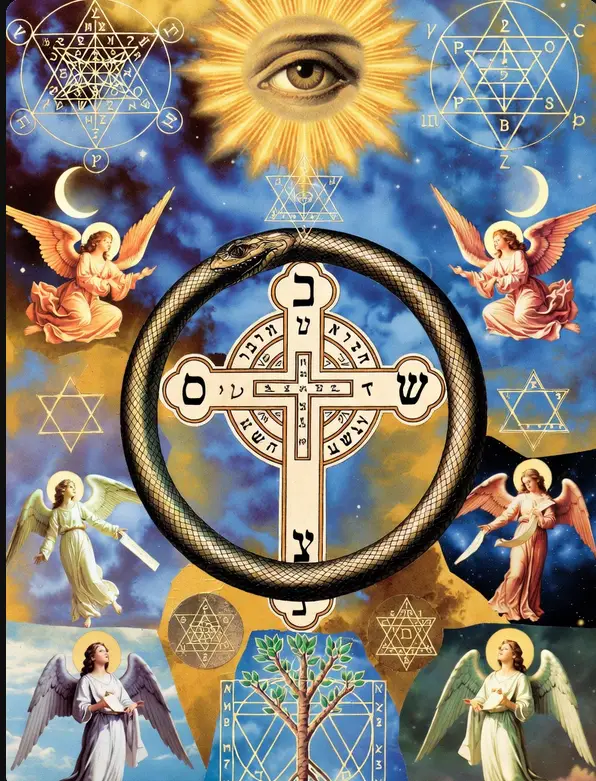 In the 1920s, after the Revolution had stabilized under new governments, Krumm-Heller sought to create an independent esoteric organization tailored to Latin American contexts. Distancing himself from European orders such as the Ordo Templi Orientis and the American Rosicrucian society led by H. Spencer Lewis, he founded the Fraternitas Rosicruciana Antiqua, or FRA, in 1927. The order positioned itself as a supra-confessional body open to Spanish- and Portuguese-speaking countries. It emphasized practical teachings: metaphysics, astrology, rune magic, healing through spiritual means, and a Christological Gnosis that presented Christ as a cosmic and interdimensional healing force rather than solely a historical figure.
The FRA attracted a diverse membership, including military officers, artists, intellectuals, and professionals interested in forging new cultural identities for post-revolutionary Latin America. In Mexico and beyond, it offered correspondence courses and structured initiations that combined Rosicrucian ritual, Theosophical ideas, and elements drawn from local indigenous and folk traditions. Huiracocha published extensively—more than thirty books and numerous articles in magazines such as Rosa Cruz—covering topics from occult medicine and Gnostic Rosicrucian Kabbalah to astrology and runic practices. His approach stressed vocalization exercises, homeopathic remedies informed by esoteric principles, and the integration of indigenous plant knowledge with European hermeticism.
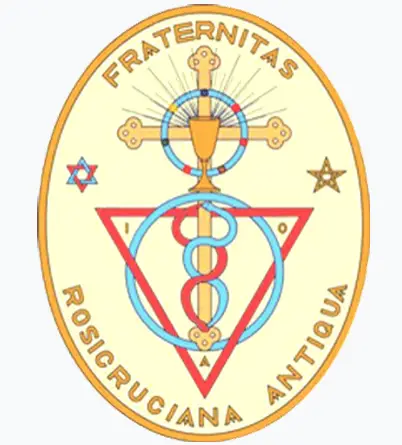 Krumm-Heller’s vision reflected the era’s broader search for spiritual renewal amid political change. Post-revolutionary Mexico grappled with questions of national identity, indigenous heritage, and the role of science versus faith. The FRA provided a framework where members could explore these topics without rejecting modernity outright. It positioned Latin America not as a peripheral recipient of European esotericism but as a vital contributor, incorporating symbols and insights from Aztec, Inca, Maya and other traditions. This syncretic quality helped the order spread across Central and South America, establishing a presence that outlasted its founder.
In his later years, Krumm-Heller divided time between Latin America and Europe. He maintained contact with students through the FRA and continued writing on Gnostic and Rosicrucian themes. He also held titles within Gnostic churches and collaborated with other initiatic networks. He died on April 19, 1949, in Marburg, West Germany, at the age of 73. After his passing, the FRA experienced divisions and schisms, as often occurs with esoteric organizations, yet branches claiming its lineage persist today in various Latin American countries, including Mexico, Brazil, and Venezuela. Some groups continue to offer courses and rituals inspired by Huiracocha’s teachings.
The enduring appeal of Krumm-Heller’s work lies in its attempt to reconcile disparate worlds: European occultism and American indigenous spirituality, scientific medicine and mystical healing, political engagement and intense inner development. In revolutionary Mexico, where spiritism and masonry already influenced some leaders – Madero himself even authored a spiritist manual – Krumm-Heller represented a cosmopolitan figure who brought international connections while adapting to local realities. His proximity to Madero and Carranza added a layer of historical intrigue, though the precise extent of his influence remains a subject of scholarly discussion based on archival records from multiple countries.
 Today, researchers examine Huiracocha through the lens of cultural history, viewing him as an early example of how esoteric movements helped shape emerging national identities in Latin America. His emphasis on a “non-sectarian” gnosis that valued direct experience over dogma resonated in a region navigating rapid social transformation. While some aspects of his biography—such as intelligence activities during the Revolution—add complexity, his primary legacy rests in the FRA and the body of writings that encouraged students to explore the hidden dimensions of reality through study, ritual, and personal transformation. The story of Arnoldo Krumm-Heller invites reflection on the role of esoteric thought in times of upheaval. In early 20th-century Mexico, amid gunfire and constitutional debates, small circles gathered to discuss runes, zodiacs, and the healing power of sound. Whether viewed as a bridge between cultures or as one of many colorful figures in the revolutionary landscape, Huiracocha left a quiet but lasting imprint on Latin American esotericism. His Fraternitas Rosicruciana Antiqua stands as a reminder that alongside the visible currents of history, subtler streams of ideas and beliefs have long flowed through Mexico, shaping minds in ways that official narratives sometimes overlook. The question remains open: how much did these hidden networks influence the cultural and spiritual climate of post-revolutionary Mexico? Archival materials continue to surface, offering new details about Krumm-Heller’s activities and the reach of the FRA. For those drawn to the unexplained aspects of Mexican history and the supernatural, his life exemplifies the intriguing overlap between medicine, mysticism, and national transformation, an overlap that still echoes in contemporary spiritual movements across Mexico and beyond.
REFERENCES
Sabazius. “Dr. Arnoldo Krumm-Heller.” The Invisible Basilica of Sabazius. Ordo Templi Orientis U.S.A., 1997. https://hermetic.com/sabazius/krumm.