
Podcast: Play in new window | Download
Subscribe: Apple Podcasts | RSS
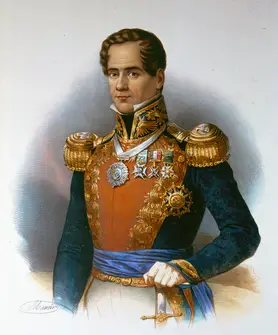 Antonio López de Santa Anna, the enigmatic Mexican general and politician who dominated his nation’s turbulent 19th-century landscape, remains one of history’s most colorful and controversial figures. Born in 1794 in Jalapa, Veracruz, to a middle-class Creole family, Santa Anna rose from a young cadet in the Spanish royal army to become Mexico’s president multiple times; eleven non-consecutive terms between 1833 and 1855. Often styling himself as the “Napoleon of the West,” he was a master of political reinvention, shifting allegiances from royalist to republican, federalist to centralist, and back again as circumstances demanded. His career spanned the Mexican War of Independence, the Texas Revolution, the Pastry War with France, and the Mexican War, during which Mexico lost vast territories to the United States. Yet, beyond his military exploits and political machinations, Santa Anna’s life was punctuated by bizarre episodes that blend tragedy, vanity, and sheer eccentricity. These stories, rooted in fact yet amplified by folklore, reveal a man whose flair for the dramatic often overshadowed his strategic acumen. In this episode of Mexico Unexplained, we delve into four such tales: the elaborate state funeral for his amputated leg, the wartime capture of his prosthetic leg by American troops, his unwitting role in introducing chewing gum to the United States, and the sham marriage he orchestrated during the siege of the Alamo. Each incident underscores Santa Anna’s larger-than-life persona, a blend of heroism, hubris, and human folly that continues to captivate historians and storytellers alike.
Amid the grim siege of the Alamo in 1836, Santa Anna’s notorious womanizing added a layer of scandal to the military campaign. As his forces bombarded the Texan-held mission in San Antonio, Santa Anna spotted a young local woman, Melchora Iniega Barrera, washing clothes by the San Antonio River. Described in accounts as a 17-year-old beauty from a respectable family, living with her 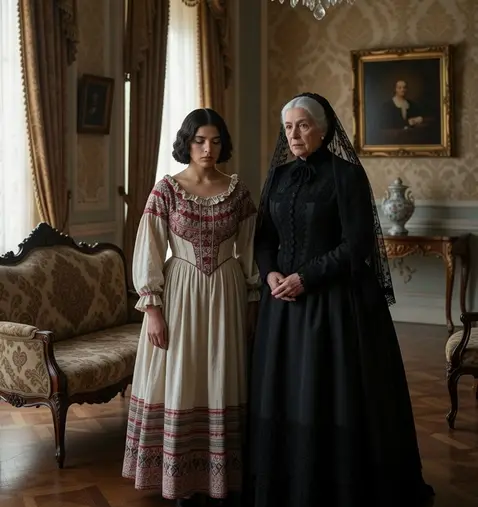 widowed mother in a modest but impressive home for the frontier town, Melchora caught the general’s eye. Santa Anna, already married twice and known for his numerous affairs, became infatuated. To pursue her without openly flouting social norms, he orchestrated a sham wedding. One of his officers posed as a priest, conducting a mock ceremony that allowed Santa Anna to consummate the “marriage” during the siege’s later stages. The affair was brief; after the Alamo’s fall on March 6, 1836, Santa Anna sent Melchora to Mexico City, reportedly unaware of his existing wife there. Contemporary witnesses, including Alamo survivor Juana Alsbury, and later memoirs like those of Antonio Menchaca, corroborate the tale, portraying it as emblematic of Santa Anna’s disregard for propriety amid war. This episode fueled Texan propaganda, painting him as a lecherous tyrant, and added to the rallying cries against Mexican forces. It humanizes the siege, showing how personal desires intertwined with historical events, and reflects the era’s gender dynamics in a colonial frontier.
The saga of Santa Anna’s leg begins just two years after the Alamo amid the absurdity of the Pastry War discussed in Mexico Unexplained episode number 134 https://youtu.be/1Ckn7rTdH8c . In 1838, France, seeking reparations for damages to French-owned businesses in Mexico—including a pastry shop allegedly looted by Mexican soldiers—launched an invasion of Veracruz. The dispute, sparked by a French baker’s claim for 60,000 pesos in compensation, escalated into a blockade and bombardment of the port city. Santa Anna, who had been in semi-retirement on his hacienda after a string of political setbacks, saw an opportunity to reclaim his status as a national hero. He rode to the defense of Veracruz, rallying troops against the French forces led by Admiral Charles Baudin. During the fierce fighting on November 27, 1838, Santa Anna positioned himself at the forefront, directing artillery fire from horseback. A French cannonball struck nearby, shattering his left ankle and mangling the lower leg beyond repair. The injury was gruesome; grapeshot tore through flesh and bone, and despite the efforts of surgeons, amputation was unavoidable. Performed without modern anesthesia, the procedure left Santa Anna in agony, but he endured it with the stoicism expected of a seasoned warrior.
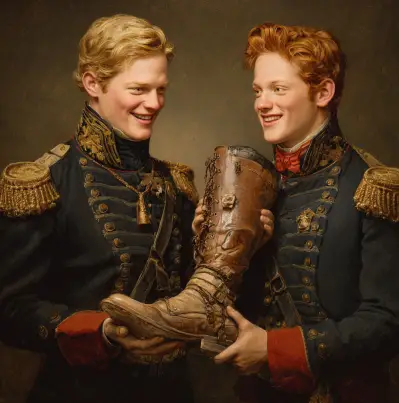 The loss of his leg became a pivotal moment in Santa Anna’s self-mythology. Rather than viewing it as a debilitating setback, he transformed the event into a symbol of patriotic sacrifice. Initially, the severed limb was buried with military honors at his estate, Manga de Clavo, near Veracruz. But Santa Anna, ever the showman, wasn’t content with a quiet interment. By 1842, he had maneuvered his way back into power, assuming the presidency once more amid a wave of conservative support. Seizing on the public’s admiration for his “heroic” wound, he ordered the exhumation of the leg. What followed was one of the most extravagant spectacles in Mexican history: a full state funeral for the amputated appendage. On September 27, 1842, the withered limb was transported to Mexico City in a lavish coach, escorted by a military procession. The ceremony included cannon salutes, poetic eulogies, grand orations praising Santa Anna’s valor, and a parade through the streets lined with cheering crowds. The leg was placed in a crystal vase and interred beneath a monumental column in the Santa Paula Cemetery, complete with inscriptions honoring the “sacrifice for the fatherland.” This event wasn’t just a burial; it was a political masterstroke, reinforcing Santa Anna’s image as a martyr who had given a part of himself for Mexico’s sovereignty.
However, Santa Anna’s fortunes were as volatile as his temperament. By 1844, public sentiment had soured due to his authoritarian rule, extravagant spending, and failed policies. Rioters, fueled by discontent over taxes and corruption, stormed the cemetery, exhumed the leg, and dragged it through the streets in a macabre display of defiance, shouting insults like “Death to the cripple!” The monument was toppled, and the leg was reportedly discarded or destroyed in the chaos. This desecration marked the beginning of another downfall for Santa Anna, who was soon overthrown and exiled. Yet the story of the leg’s funeral endures as a testament to his vanity: a man who mourned his own body part with the pomp reserved for fallen heroes. It highlights the era’s turbulent politics, where personal symbolism could elevate or doom a leader. Santa Anna’s ability to turn personal loss into political gain, only to see it backfire, encapsulates the precarious nature of power in early independent Mexico.
Not content with losing his leg once, Santa Anna effectively lost it a second time during the Mexican War, in an episode that blended battlefield drama with wartime trophy-hunting. After the Pastry War, Santa Anna commissioned a prosthetic leg made of cork and wood, adorned with leather and a boot for functionality and style. This artificial limb allowed him to resume his active lifestyle, including military campaigns. By 1846, tensions between Mexico and the United States had erupted into full-scale war, triggered by disputes over Texas’s annexation and border claims. Santa Anna, exiled in Cuba after his 1845 ouster, negotiated a secret return with U.S. President James K. Polk, promising to facilitate peace talks. Instead, upon arriving in Mexico, he seized power and rallied forces against the American invaders, positioning himself once again as the defender of the nation.
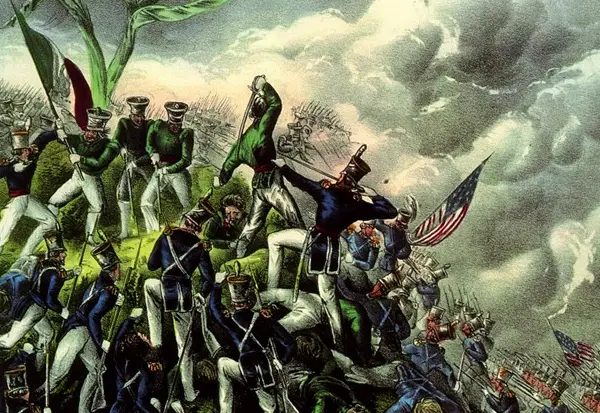 The pivotal moment came at the Battle of Cerro Gordo on April 18, 1847. Santa Anna’s army, numbering around 12,000, fortified the rugged mountain pass east of Mexico City to block General Winfield Scott’s advance. The position seemed impregnable, with steep cliffs and artillery dominating the road. However, American engineers, including a young Robert E. Lee, discovered a flanking path, allowing U.S. troops to outmaneuver the Mexicans. As the battle unfolded, Santa Anna was in his camp, reportedly enjoying a midday meal of roast chicken with his prosthetic leg removed for comfort. The 4th Illinois Volunteer Infantry Regiment, part of the surprise attack, overran his position. Chaos ensued; Santa Anna, caught off guard, mounted a horse (or donkey, by some accounts) and fled, leaving behind his carriage, a chest of gold, his unfinished lunch, and crucially, the prosthetic leg. The Illinois soldiers claimed the leg as a war trophy, along with the gold (which they turned over to superiors) and the chicken (which they promptly devoured). The prosthetic, an ornate piece crafted in New York, became a symbol of American triumph. Back in the U.S., it inspired song parodies and even a baseball bat improvisation among the troops. The leg was transported to Illinois, where it has remained ever since, displayed at the Illinois State Military Museum in Springfield. Despite repeated Mexican requests for its return, including diplomatic overtures, it stays as a quirky relic of the war. A second prosthetic, a simpler peg leg, was captured later and resides in a private collection, while Mexico holds a replacement in its national history museum.
This incident not only humiliated Santa Anna—contributing to his defeat and the eventual fall of Mexico City—but also underscored the personal toll of war. The battle resulted in heavy Mexican losses, with over 1,000 dead and thousands captured, paving the way for the Treaty of Guadalupe Hidalgo and Mexico’s cession of vast territories discussed in Mexico Unexplained episode 438 https://youtu.be/RqLjjCfxuFw . For Santa Anna, the loss amplified his reputation as a flawed commander, prone to overconfidence and poor preparation. Yet, in American folklore, it humanized him, turning the fearsome general into a figure of ridicule, leaving his leg behind. The story persists as a bizarre footnote in military history, illustrating how chance encounters can shape legacies.
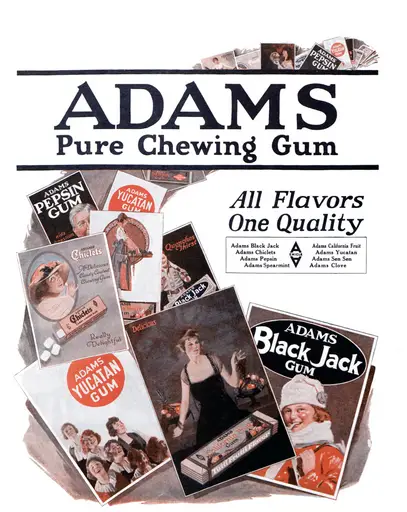 In a twist that veers from warfare to whimsy, Santa Anna’s final exile led to his accidental contribution to American consumer culture: the popularization of chewing gum. After the Mexican War’s disastrous end in 1848, Santa Anna faced exile once more, this time to Jamaica and then Colombia. By the 1850s, he was plotting yet another comeback, but his schemes often bordered on the fanciful. In 1866, following a brief return to power during the French intervention and subsequent defeat, he found himself exiled to Staten Island, New York. There, living modestly among the island’s agricultural community, Santa Anna brought with him a supply of chicle, the sap from the sapodilla tree native to Mexico and Central America. Indigenous peoples, including the Maya and Aztecs, had chewed chicle for centuries as a natural gum to freshen breath and aid digestion. Santa Anna, who chewed it habitually to soothe his nerves, saw potential in it as a cheap substitute for rubber, which was expensive and in high demand for tires and other products. Enter Thomas Adams, a Staten Island inventor, glassmaker, and Civil War photographer who befriended Santa Anna’s interpreter. Intrigued by the elastic properties of chicle, Adams agreed to experiment with it, investing $30,000 in the venture with Santa Anna’s backing. The general hoped the profits would fund his return to Mexico and yet another political resurgence. They attempted to vulcanize chicle into rubber for carriage wheels and other uses, but the experiments failed repeatedly; chicle proved too sticky and unstable for industrial applications. Undeterred, Adams noticed Santa Anna’s chewing habit and tried flavoring small balls of the substance. When Santa Anna departed for Mexico in 1870—his dreams of rubber riches dashed—he left behind a ton of chicle. Adams, pivoting ingeniously, began producing unflavored chewing gum, selling it in drugstores for a penny apiece. Success
 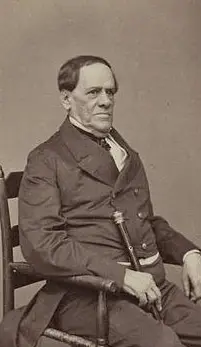 came swiftly; by 1871, he patented a gum-making machine and launched flavored varieties like Black Jack (licorice) and later Chiclets, founding the Adams Chewing Gum Company. Santa Anna profited nothing from this innovation, but his role was pivotal. Without his introduction of chicle to Adams, modern chewing gum might have evolved differently. The industry boomed, with competitors like William Wrigley Jr. entering the market, turning gum into a global phenomenon. This story reveals Santa Anna’s opportunistic side, always scheming for wealth and power, yet inadvertently leaving a legacy in everyday Americana. It’s a reminder of how exile and failure can spark unexpected inventions, bridging cultures in the most mundane ways.
These strange but true stories illuminate Santa Anna’s complex legacy: a leader whose ambition and eccentricity shaped Mexico’s fate, often to its detriment. From burying his leg with pomp to fleeing without it, from chicle dreams to fleeting romances, his life was a tapestry of the absurd and the audacious. In the end, Santa Anna died in obscurity in Mexico City in 1876, but his tales endure, reminding us that history’s giants are often all too human.
REFERENCES
Callcott, Wilfred Hardy. Santa Anna: The Story of an Enigma Who Once Was Mexico. Norman: University of Oklahoma Press, 1936.
Fowler, Will. Santa Anna of Mexico. Lincoln: University of Nebraska Press, 2007.
Hardin, Stephen L. Texian Iliad: A Military History of the Texas Revolution. Austin: University of Texas Press, 1994.