
Podcast: Play in new window | Download
Subscribe: Apple Podcasts | RSS
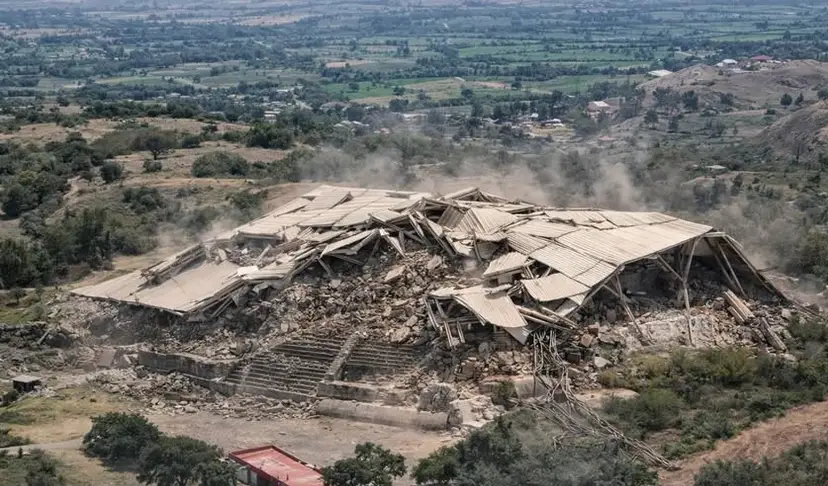 In the last week of December 2025, reports on the internet showed a collapsed roof structure protecting the beautiful murals of the little-known archaeological site of Cacaxtla. High winds blew out the pillars holding up the structure and the most important part of this site was destroyed beyond saving. It would be a tremendous loss except for the fact that images of destruction were A.I.-generated, and nothing happened at Cacaxtla. Archaeologists and Mexican historians breathed a sigh of relief. The precious site of Cacaxtla was intact.
Nestled in the fertile valleys of Tlaxcala, Mexico, the archaeological site of Cacaxtla stands as a testament to the complex interplay of cultures in ancient Mesoamerica. Often overshadowed by more famous sites like Teotihuacan or Chichen Itza, Cacaxtla offers a unique window into the Epiclassic period dating from around 650 to 900 AD, a time of transition and turmoil following the collapse of major civilizations. What sets Cacaxtla apart is its astonishing array of vividly colored murals, which blend Maya artistic styles with central Mexican iconography, creating a visual narrative of warfare, divinity, and cosmic order. These murals, preserved remarkably well due to the site’s late excavation, depict scenes of brutal battles, priestly figures, and astronomical symbols, hinting at a society ruled by warrior-elites who controlled vital trade routes.
The name “Cacaxtla” derives from the Nahuatl word cacaxtli, meaning a merchant’s backpack or frame, possibly alluding to the site’s role in commerce. Spanning about 25 acres, the site was home to an estimated 10,000 inhabitants at its peak, functioning as a fortified acropolis atop a natural hill. Its inhabitants, the Olmeca-Xicallanca people, are believed to have migrated from the Gulf Coast, bringing with them influences that challenge traditional views of Mesoamerican cultural boundaries. Today, Cacaxtla is managed by Mexico’s National Institute of Anthropology and History, or INAH, and attracts visitors eager to explore its protected ruins under a massive metal roof. This episode of Mexico Unexplained delves into the history, discovery, architecture, murals, cultural significance, and modern preservation of Cacaxtla, revealing why it remains one of Mexico’s most intriguing archaeological treasures.
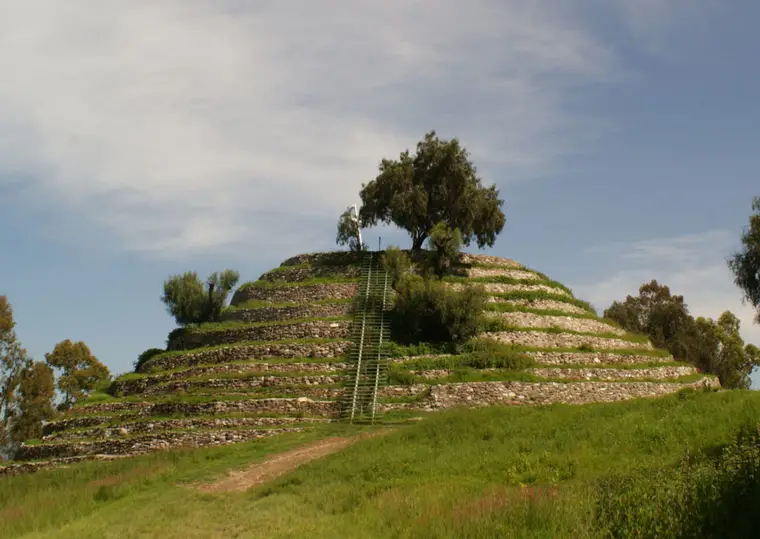 The roots of Cacaxtla trace back to the Preclassic period, but its prominence emerged during the Epiclassic era, a time marked by the decline of Teotihuacan around 650 AD and the subsequent power vacuum in central Mexico. The Olmeca-Xicallanca, a group whose origins are shrouded in mystery, are thought to have arrived in the Puebla-Tlaxcala Valley around 400 AD, possibly as Maya settlers or traders from the Gulf Coast region. Historical accounts from 16th-century Tlaxcalan chroniclers describe them as “Olmeca,” a term that evokes the ancient Olmec civilization but most likely refers to a distinct ethnic group with southern ties. By the 7th century, Cacaxtla had risen as a hegemonic power, potentially involved in the fall of nearby Cholula, a major religious center. Archaeological evidence suggests that Cacaxtla’s warriors may have sacked Cholula between 650 and 750 AD, leading to a temporary occupation before being expelled by Toltec forces. This period of ascendancy allowed Cacaxtla to dominate trade routes connecting the Gulf Coast to the central highlands, facilitating the exchange of goods like cacao, feathers, jade, and obsidian. The site’s strategic location on a hill provided defensive advantages, overlooking fertile lands ideal for agriculture.
Cacaxtla’s society was hierarchical, with a ruling class of priest-warriors who blended religious authority with military prowess. The nearby site of Xochitecatl, located just a mile away, served as a complementary ceremonial center, featuring pyramids dedicated to fertility and astronomy. While Cacaxtla was more elitist and residential, Xochitecatl hosted public rituals, including offerings of ceramic figurines depicting pregnant women and children, underscoring themes of reproduction and cosmic cycles.
The decline of Cacaxtla began around the year 900, coinciding with broader regional shifts, including the rise of the Toltecs at Tula. By the year 1000, the site was abandoned, its structures buried under earth and vegetation. This abandonment preserved the murals from looting and environmental damage, unlike many other Mesoamerican sites. Post-abandonment, the region fell under the control of the Tlaxcalteca, who resisted Aztec expansion until the Spanish conquest in 1521. The Olmeca-Xicallanca’s legacy, however, endured in local lore as skilled merchants and fierce warriors.
 In broader Mesoamerican context, Cacaxtla exemplifies the “international style” of the Epiclassic period, where cultural exchanges intensified amid political fragmentation. Influences from Teotihuacan, the Maya lowlands, and even the Mixtec regions converged here, creating a hybrid identity. Scholars debate whether the Olmeca-Xicallanca were direct Maya descendants or simply adopted Maya artistic conventions through trade or migration. Ceramic evidence shows ties to the Gulf Coast, while skeletal remains suggest a diverse population. This historical tapestry positions Cacaxtla as a bridge between the Classic and Postclassic eras, illuminating how smaller political entities navigated the collapse of empires.
The modern rediscovery of Cacaxtla occurred in September 1975, a serendipitous event that unveiled one of Mesoamerica’s greatest artistic treasures. Local farmers or maintenance workers, digging irrigation channels or a tunnel near San Miguel del Milagro in Tlaxcala, stumbled upon colorful murals buried beneath the earth. Initial reports described vivid paintings of human figures, prompting immediate interest from archaeologists. The site had been known locally for artifacts, but the scale of the find was unprecedented. Archaeologists led the initial excavations, dedicating over six years to the project. The team expanded the original tunnel, uncovering multiple construction phases and securing the site against looters, who had already begun targeting artifacts. Excavations focused on the Gran Basamento, the site’s central platform. By the 1980s, under INAH oversight, workers cleared layers of fill to reveal the murals in situ. This late excavation was crucial: unlike earlier sites where colors faded upon exposure, Cacaxtla’s artworks retained their vibrancy due to controlled uncovering and immediate protection. A massive sheet-metal roof was erected to shield the structures from rain and sun, preventing the degradation seen at other mural sites like Bonampak. Challenges during excavation included stabilizing the sloping walls of the Battle Mural and documenting the site’s stratigraphy. Artifacts recovered included ceramics, obsidian tools, and jade ornaments, confirming trade links. In the 1990s, further explorations at Xochitecatl revealed complementary findings, such as altars and burials, enriching the understanding of Cacaxtla’s regional role. Recent developments in excavation are limited, as the site is largely conserved rather than actively dug. However, in the 2010s, INAH conducted surveys using ground-penetrating radar to map unexcavated areas, identifying potential residential zones. No major new discoveries have been announced, but ongoing conservation efforts address erosion and tourism impacts. The site’s museum, opened in the 1980s, displays reproductions and artifacts, educating visitors on the excavation process.
 Cacaxtla’s architecture reflects its dual role as a fortified palace and ceremonial center, built atop a natural acropolis for defense and visibility. The core is the Gran Basamento, a massive platform measuring approximately 656 feet long, 361 feet wide, and 82 feet high, constructed from adobe, stone, and earth fill. This structure, with its talud-tablero slopes, echoes Teotihuacan styles but incorporates unique elements like spiral designs. Atop El Basamento sat elite residences, temples, and plazas. The northern plaza houses the Battle Mural on a sloping wall, divided by a central staircase. Building A features jamb murals with supernatural figures, while the Venus Temple, under a protective roof, includes column paintings linking astronomy to warfare. The Templo Rojo – Red Temple – contains murals on staircase walls, depicting agricultural deities. A spiral pyramid, unusual in central Mexico, suggests southern influences. Surrounding El Basamento are smaller pyramids and residential complexes, indicating a stratified society. Defensive moats and walls protected the site, emphasizing its military importance. Water management systems, including channels, supported agriculture in the valley below. Compared to contemporaries, Cacaxtla lacks the grand pyramids of Teotihuacan but excels in painted decoration. Its layout prioritizes elite spaces over public ones, contrasting with Xochitecatl’s open plazas. Conservation has preserved much of the architecture, allowing visitors to walk pathways and view structures from overlooks.
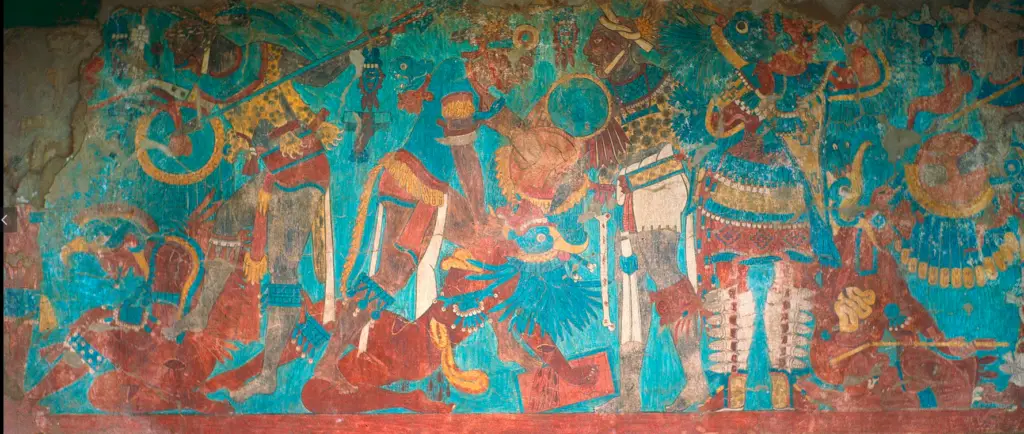
Cacaxtla’s murals are its crowning glory, covering almost 5,400 square feet and painted in a fresco technique using natural pigments, including the rare Maya Blue which is derived from indigo and clay. Their style fuses Maya naturalism with highland symbolism, featuring fluid lines, anatomical accuracy, and emotional depth absent in Teotihuacan art. The Battle Mural, dating before the year 700, spans 85 feet on the northern talud. It narrates a savage conflict between two groups. Victors are depicted as having gray-brown skin, aquiline noses, and weapons like atlatls and obsidian knives. The defeated are depicted with Maya-like features – deformed skulls, jade jewelry – stripped naked and eviscerated. Scenes of gore—entrails spilling, warriors in agony—convey the brutality of warfare, possibly depicting the conquest of Maya-affiliated peoples. Flanking jambs show a bird-man on a plumed serpent and a jaguar-man on a feline serpent, symbolizing cosmic duality. The Priestly Attire Murals portray bird- and feline-men as ruler-priests. The bird-man, linked to Quetzalcoatl, holds symbols of agriculture. The feline-man evokes rain and fertility, blending Teotihuacan, Maya, Mixtec, and Totonac elements. In the Venus Temple, columns depict figures with Venus symbols represented as half-stars, and scorpion tails, alluding to the planet’s cycle as a war omen. A female fragment suggests gender balance in rituals. The Templo Rojo Mural, on a staircase, shows an agricultural deity, emphasizing sustenance. Stylistically, the murals use varied lines for three-dimensionality, Maya proportions of 5.5-6 heads tall, and contrapposto poses. Influences from Palenque stelae and Bonampak battles are evident, but Cacaxtla’s frieze-like composition and emotional intensity are unique. Theories posit Maya artists migrated or were commissioned, explaining the “out-of-place” style in central Mexico. These artworks not only beautify but narrate ideology: warfare as divine mandate, rulers as intermediaries between earth and cosmos.
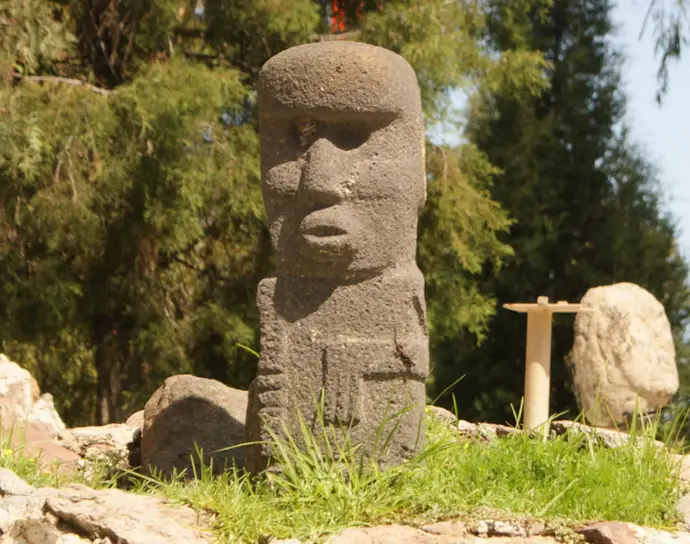 Cacaxtla’s significance lies in its role as a cultural crossroads, challenging the notion of isolated Mesoamerican regions. The Maya-style murals in a highland setting suggest migration, trade, or elite intermarriage, with theories ranging from Gulf Coast Maya founders to visiting Yucatán artists. An Olmec-like sculpture near the entrance adds layers, hinting at deeper ancestral ties. The site illuminates Epiclassic dynamics: post-Teotihuacan power struggles, ethnic conflicts as seen in the Battle Mural, and syncretic religious practices. Venus motifs tie astronomy to warfare, a pan-Mesoamerican theme. As a trade hub, Cacaxtla facilitated cultural diffusion, influencing later Toltec and Aztec art. Symbolically, murals depict conquered women and scorpion figures, suggesting gender roles in conquest narratives. The Olmeca-Xicallanca’s resistance to Aztecs is reminiscent of a later Tlaxcalan alliance with Cortés, embedding Cacaxtla in conquest history. Globally, Cacaxtla contributes to understanding pre-Columbian art’s power, comparable to Egyptian tombs or Greek friezes. Its preservation underscores the importance of ethical archaeology.
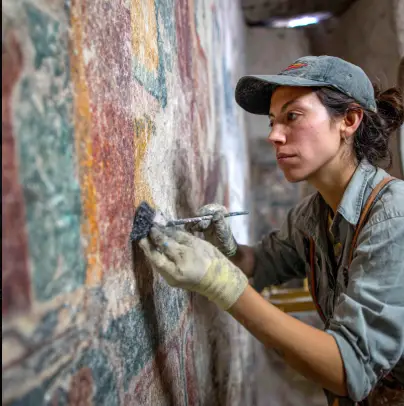
Cacaxtla is a meticulously preserved site, with its murals protected under expansive roofs that allow natural light while shielding from elements. INAH continues restoration work, using techniques to stabilize pigments and structures. Tourism is managed sustainably, with walkways preventing direct contact with fragile areas. Visitors enter through a museum showcasing replicas, artifacts, and explanatory panels. The path leads to the Gran Basamento, where the murals’ colors remain strikingly vivid centuries later. Combined tickets often include Xochitecatl, offering a fuller regional experience. Cacaxtla serves to remind us of Mesoamerica’s diversity and resilience. Its murals, frozen in time, continue to captivate, inviting reflection on ancient worlds where art, power, and cosmology intertwined.
REFERENCES