
Podcast: Play in new window | Download
Subscribe: Apple Podcasts | RSS
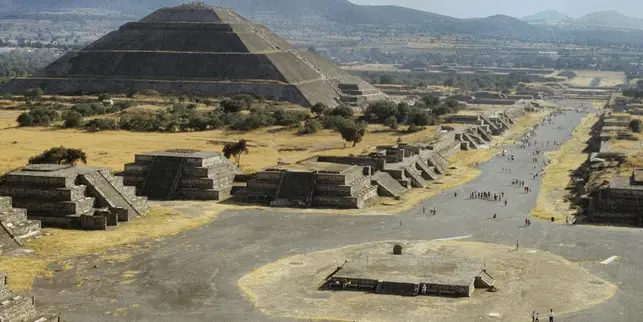 Teotihuacan, the ancient Mesoamerican metropolis often called the “City of the Gods,” stands as one of archaeology’s most enduring enigmas. Located just northeast of modern-day Mexico City, this sprawling urban center flourished from around 100 BC to 600 AD, boasting a population that may have exceeded 100,000 at its peak, thus making it one of the largest cities in the world during its heyday. Its monumental pyramids, including the Pyramid of the Sun and the Pyramid of the Moon, align with celestial events, while its broad Avenue of the Dead serves as a testament to sophisticated urban planning. Yet, despite its grandeur, Teotihuacan has long been shrouded in mystery. Who built it? What language did its inhabitants speak? And crucially, did they possess a writing system to record their thoughts, histories, and rituals? For decades, scholars debated whether Teotihuacan had a true script. Unlike the Maya civilization to the southeast, which left behind thousands of decipherable hieroglyphs detailing dynasties, wars, and cosmology, Teotihuacan’s artifacts seemed curiously silent. Murals and pottery bore intricate symbols—colorful depictions of animals, plants, and abstract motifs—but many experts have dismissed these as mere decorative notation or calendrical markers, not a full-fledged writing system capable of encoding spoken language. The case for no written script at Teotihuacan also stemmed from the site’s apparent lack of lengthy inscriptions on monuments and buildings in addition to the absence of codices, the folded books made of bark paper or animal skins used by later Mesoamerican cultures discussed in Mexico Unexplained episode number 204 https://youtu.be/Ozxl8bq-qfg . However, a groundbreaking 2025 study by researchers Christophe Helmke and Magnus Pharao Hansen from the University of Copenhagen has reignited the debate, proposing that the symbols seen at Teotihuacan and on Teotihuacan artifacts do indeed form a sophisticated script recording an early form of a language from the Uto-Aztecan language family. Drawing on murals from sites like the Tetitla compound and artifacts scattered across the city, their work suggests a direct linguistic link between Teotihuacan’s inhabitants and later Nahuatl-speaking peoples, including the Aztecs. This episode of Mexico Unexplained explores the evidence for Teotihuacan’s possible writing system, synthesizing insights from the recent study with historical context and ongoing scholarly discussions. By examining the symbols’ structure, their potential phonetic elements, and the implications for Mesoamerican history, we can appreciate how this “silent” city might finally be finding its voice—potentially rewriting our understanding of ancient cultural connections.
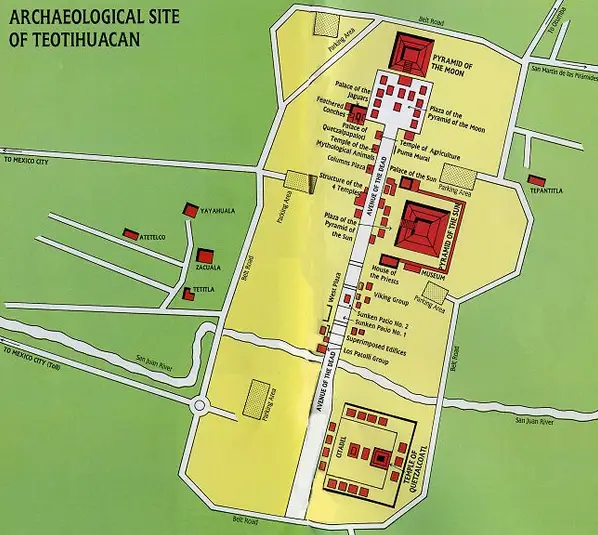 To grasp the significance of a potential writing system, one must first understand Teotihuacan’s place in Mesoamerican history. Founded around 100 BC, the city grew rapidly during the Classic Period from roughly 150 to 650 AD. It became a hub of trade, religion, and innovation. Its influence extended far beyond central Mexico, with Teotihuacan-style artifacts found in Maya cities like Tikal and Copán, suggesting diplomatic or military interactions. The city’s layout was meticulously planned: the Pyramid of the Sun, standing over 200 feet tall, was built over a cave symbolizing the underworld, while murals depicted vibrant scenes of fertility goddesses, jaguars, and processions of priests. Despite its power, Teotihuacan’s society appears remarkably egalitarian compared to contemporaries. There is little evidence of a cult of personality, in that there are no statues of rulers or inscriptions glorifying kings. Instead, governance may have been collective, perhaps involving merchant guilds or religious elites. The city’s murals, found in apartment compounds housing diverse ethnic groups, often portray communal rituals, emphasizing harmony with nature and the cosmos. By around 600 AD, Teotihuacan mysteriously declined. Fires ravaged elite structures, and the population dispersed, leaving the site abandoned. Theories abound: environmental degradation, climate catastrophe, internal revolt, or invasion by nomadic groups. The Aztecs, arriving centuries later around 1300 AD, revered the ruins as the birthplace of the gods, naming it Teotihuacan, meaning “the place where the gods were created” in the Nahuatl language. They claimed descent from its people, but without written records, this link remained speculative, until recent linguistic analyses.
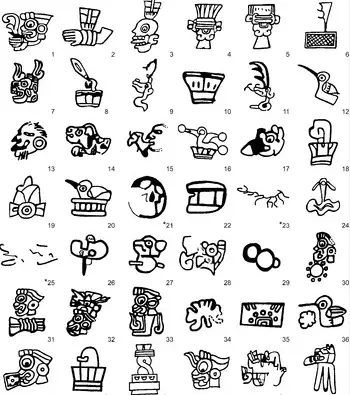 The question of writing at Teotihuacan has puzzled scholars since the site’s systematic excavation began in the early 20th century. Early researchers noted recurring motifs on murals and ceramics, such as speech scrolls emerging from figures’ mouths, suggesting communication or incantation. However, these were often interpreted as ideographic, or visual ideas rather than phonetic representations of speech. Many archaeologists and scholars argued that Teotihuacan lacked writing in the form of inscriptions or documentary records, viewing the signs as a notational system for calendrical or economic purposes. This view persisted because Teotihuacan symbols rarely form long sequences; most are isolated or in small clusters. Compared to the over 800 different glyphs of the Maya civilization, which combine logograms or word signs, and syllabic elements to spell out sentences, Teotihuacan’s inventory seemed limited, perhaps to 100 to 200 signs. Yet, cracks in this consensus emerged. Analyses of Teotihuacan influence on Maya sites revealed borrowed glyphs, hinting at a shared scribal tradition. Some described the system as “onomatographic,” blending images and texts in a way that could convey names or titles. By 2021, scholars were noting overlaps with other Mesoamerican scripts. Still, the language remained elusive: candidates included Totonac, Mixe-Zoquean, or early Nahuatl. The scarcity of texts exacerbates the challenge. Only about 300 known examples exist, dwarfed by the thousands of Maya inscriptions. Many are on perishable materials like murals, vulnerable to erosion. Moreover, Teotihuacan’s multi-ethnic population—evidenced by neighborhoods with Otomi, Maya, and Zapotec influences—suggests possible multilingualism, complicating identification.
In a 2025 study published in Current Anthropology, Christophe Helmke and Magnus Pharao Hansen argue that Teotihuacan’s signs constitute a true writing system, sharing principles with other Mesoamerican traditions like the rebus principle—using a picture’s sound to represent another word—and “double spelling,” where signs reinforce phonetic readings. Their evidence draws from recurring signs on murals and pottery, analyzed for grammatical clues. For instance, symbols appear in contexts suggesting syntax, like modifiers attached to nouns. The duo proposes the script encodes a Uto-Aztecan language ancestral to Nahuatl, Cora, and Huichol, which are modern languages still spoken in Mexico. This “proto-Uto-Aztecan” would date to around 2,000 years ago, aligning with Teotihuacan’s zenith. To achieve this, they reconstructed the ancient language by comparing descendant tongues, accounting for sound shifts over 1,500 years. For example, a coyote glyph might logographically mean “coyote” but phonetically represent sounds like ko:yo: in proto-Uto-Aztecan, used in rebuses for homophones, or words with identical sounds. This dual functionality marks it as writing, not just art. Specific readings include glyphs for place names or titles. One mural from the Tetitla apartment shows a figure with speech scrolls containing signs that might spell “lord” or “rain god” in the ancestral language. They offer tentative decipherments for several glyphs, inviting collaboration to refine them.
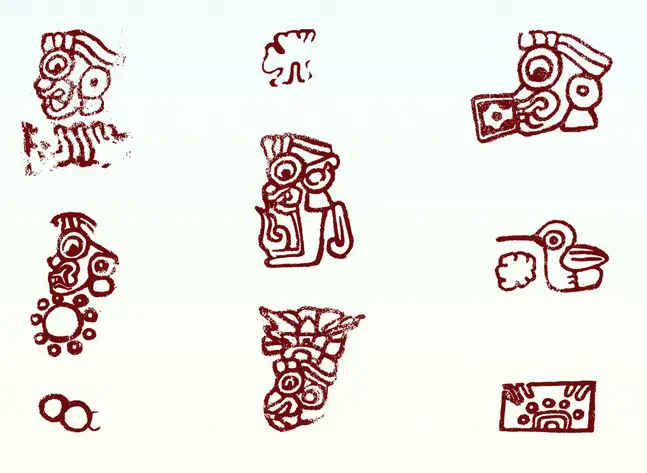 At its core, the proposed Teotihuacan script is what linguists call “logophonetic”: logograms depict whole words, while phonetic elements spell sounds. This mirrors Maya and Zapotec systems but is more pictorial, relying on vibrant colors and integration with art. For example, a flower sign might mean the word “flower” – a logogram – or it could be used to represent the sound xo:chi which could serve as a rebus for “Xochitl,” a name meaning “flower” in Nahuatl. The rebus method is key. Here is an example of a rebus in English: a “bee” picture plus “leaf” might spell “belief.” Similarly, Teotihuacan signs use visual puns. “Double spelling” adds redundancy, like repeating sounds for clarity which is a common Mesoamerican trait.
Reconstruction poses hurdles. Uto-Aztecan encompasses over 30 languages from the U.S. Southwest to Central America, with Nahuatl having millions of speakers today. Proto-Nahuatl forms – the earlier versions of the language – are hypothetical and created based on comparative linguistics. Critics note that earlier attempts using Classical Nahuatl failed because the language evolved. Older reconstructions just fit better. Limited material to draw from is another issue. With few texts, statistical analysis is tricky. New excavations could yield more, but modern urban sprawl threatens the ancient city.
If validated, this script implies profound historical continuity. The Aztecs spoke Nahuatl, a Uto-Aztecan language, and venerated Teotihuacan. Nahuatl speakers may have been present before the city’s fall, challenging theories of later Aztec migrations into central Mexico. This could explain Aztec myths of originating from a northern homeland, with Teotihuacan as a cultural bridge. Broader implications touch ethnicity. Teotihuacan was multi-ethnic, but a Uto-Aztecan core might indicate dominance by proto-Nahuan groups. It also reframes Mesoamerican linguistics: Uto-Aztecan’s presence in central Mexico pushes its timeline back, influencing debates on language spread.
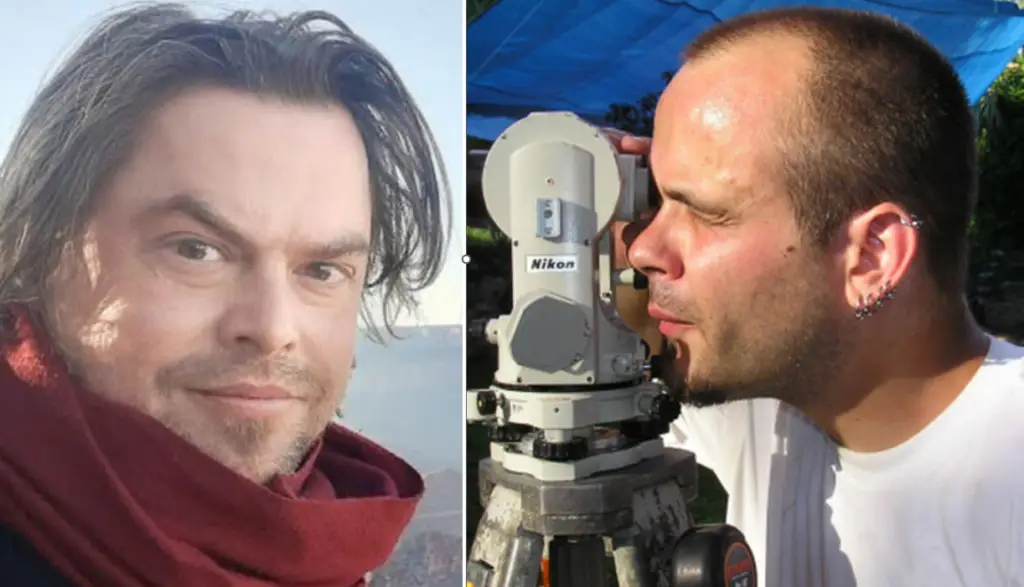 Not all researchers are convinced. The study has reignited debate of a Teotihuacan writing system, with some archaeologists questioning the Uto-Aztecan fit due to sparse evidence. Others note the script’s apparent extinction: why didn’t it survive like Maya glyphs? Possible reasons include societal collapse or shift to oral traditions. Helmke and Hansen emphasize their work is preliminary, calling for workshops to test their findings.
Advancing this research requires interdisciplinary efforts: linguists reconstructing sounds, archaeologists excavating texts, and AI aiding pattern recognition. Sites like La Ventilla may hold untapped murals. Public engagement, through museums and digital archives, could crowdsource insights. The discovery or decipherment of Teotihuacan’s possible writing system could transform the ancient city from a silent ruin to an eloquent archive. If Helmke and Hansen are correct, these 2,000-year-old murals don’t just decorate, they speak and thus reveal a lost Uto-Aztecan world. This breakthrough not only deciphers symbols but bridges millennia, connecting ancient builders to their descendants. As more evidence emerges, the City of the Gods may finally reveal its secrets, enriching our tapestry of ancient Mexican and overall human history.
REFERENCES