
Podcast: Play in new window | Download
Subscribe: Apple Podcasts | RSS
Nestled on the banks of the Rio Grande, where the dusty borderlands of Mexico meet the sprawl of Texas, Nuevo Laredo stands as a gateway between worlds. Founded in 1848 amid the turmoil of the Mexican War, this bustling city in Tamaulipas has long been a crossroads; not just for trade and travelers, but for tales that blur the line between reality and the supernatural. In a place where history echoes with revolutions, migrations, and the harsh realities of frontier life, it’s no surprise that urban legends thrive. These stories, passed down through generations, often reflect the fears and mysteries associated with daily existence: abandoned houses whispering secrets, spectral figures lurking in the night, and encounters with forces that defy explanation. Nuevo Laredo’s folklore draws from a rich tapestry of indigenous Huastec influences, colonial Spanish ghosts, and modern urban anxieties amplified by its proximity to the border. Unlike the ancient myths of central Mexico, these legends feel immediate, tied to specific streets, buildings, and events that locals swear are true. They emerge during quiet evenings around family tables or in the glow of smartphone screens, shared as warnings or thrills. In this episode of Mexico Unexplained, we’ll delve into four of the most chilling and enduring legends from Nuevo Laredo, exploring the eerie apparitions that haunt its highways, neighborhoods, and graveyards. From phantom clowns to devilish dancers, these tales remind us that in the borderlands, the veil between the living and the dead is perilously thin.
Number One: The Clown from Hell.
 One of the most persistent and spine-tingling legends in Nuevo Laredo revolves around a spectral figure known as the Clown of Nuevo Laredo. This isn’t the jolly entertainer of children’s parties; instead, it’s a harbinger of dread, a ghostly remnant from a bygone era of traveling circuses that once rolled through the border towns, bringing laughter laced with an undercurrent of unease. The story traces back to the early 20th century, when circuses were a rare spectacle in these parts. According to oral accounts, a small troupe arrived in Nuevo Laredo one sweltering summer, setting up their big top in the Colonia Madero neighborhood. The star of the show was a clown named Paco, renowned for his painted smile and acrobatic antics. But Paco harbored a dark secret: he was tormented by personal demons, perhaps a lost love or a tragic accident that left him scarred. One night, during a performance gone awry, a fire broke out in the tent, some say caused by faulty lanterns, some say sabotage. Paco the Clown perished in the flames, his body charred beyond recognition, but his spirit, trapped in eternal torment, refused to leave. Locals claim the clown’s ghost first appeared shortly after the tragedy, wandering the dimly lit streets at midnight. Dressed in tattered red-and-white stripes, with a faded pom-pom hat and oversized shoes that make no sound on the pavement, he materializes in fog-shrouded alleys or near abandoned lots. Witnesses describe a figure that approaches slowly, its painted face cracking into an unnatural, hideous grin. Some say he carries a cassette tape or an old music box, playing a distorted carnival tune that lures the curious closer. Those who get too near report feeling an icy grip on their shoulder, followed by visions of fire and screams. In more recent retellings, the clown has adapted to the modern world. Teenagers cruising late at night have shared stories of seeing him in rearview mirrors, hitchhiking along the highway toward Laredo, Texas. One account from the 1990s involves a group of friends who picked up what they thought was a costumed reveler during Halloween, only for him to vanish from the backseat, leaving behind a scorched handprint on the upholstery. Skeptics dismiss it as mass hysteria or pranks, but believers point to the consistency of details: the smell of smoke, the silent laughter, and the overwhelming sense of sorrow that lingers after an encounter. What makes this legend so unsettling is its reflection of deeper fears. In a city marked by rapid change and occasional violence, the clown embodies the unpredictability of joy turning to horror. Podcasts and social media have kept the tale alive, with users posting blurry photos and videos purporting to capture the phantom. Whether a product of collective imagination or a genuine unrested soul, the phantom clown serves as a cautionary figure: beware the laughter in the dark, for it might not be what it seems.
Number Two: The Devil at the Rodeo
This devilish tale centers on the infamous Silverado Rodeo, a once-popular nightclub in Nuevo Laredo known for its country-western vibe, line dancing, and lively crowds. What began as a fun night out in the late 1990s or early 2000s turned into a brush with the infernal, inspiring northern Mexican folk ballads that still echo in border bars. The story unfolds on a packed Friday evening, with  patrons decked in cowboy hats and boots, swaying to accordion-heavy norteño music. Amid the throng entered a strikingly handsome stranger: tall, dark-haired, dressed in impeccable black attire—a Stetson hat, embroidered shirt, and polished boots. He moved with unnatural grace, charming women and outdancing everyone on the floor. Whispers spread about his piercing eyes and the way he seemed to anticipate every beat. As the night peaked, he joined a dance contest, twirling partners with effortless flair. But then, disaster struck. During a vigorous spin, one of his boots flew off, revealing not a foot but a cloven hoof clad in fur, like a goat’s. Panic ensued as the other boot followed, exposing the truth: this was Lucifer himself, come to tempt souls in the guise of a vaquero. Screams filled the air; lights flickered; some swear the music warped into demonic laughter. The devil vanished in a puff of sulfurous smoke, leaving behind scorched footprints on the dance floor. The club reportedly closed soon after, though remnants of the building stand as a curiosity. Eyewitness accounts vary: some say he was there to collect a debt from a gambler, others that he targeted the proud or the sinful. Skeptics attribute the event to mass hallucination from cheap tequila or an elaborate prank, but believers note similar tales in other Tamaulipas towns, like the devil at Tampico’s West Point discotheque. This legend embodies the duality of border nightlife: exuberance masking peril. In a region where temptation—be it vice, wealth, or risk—is ever-present, El Diablo warns of deals too good to be true. Today, the story lives on in Halloween retellings, a reminder that even in merriment, evil might lurk in the shadows.
Number Three: The Phantom Horse of the Borderlands.
Deeper into the ethereal realm rides the Phantom Horse. This spectral steed gallops through the legends of Nuevo Laredo, often sighted in the outskirts where urban sprawl meets wild desert scrubland. Unlike humanoid ghosts, this one evokes the untamed spirit of the frontier, harking back to the days of cowboys and cattle drives across the Rio Grande. The tale begins in the 1800s, during the city’s founding era. A legendary rancher named Don Esteban owned a magnificent black stallion, prized for its speed and loyalty. During a border skirmish, Don Esteban was ambushed 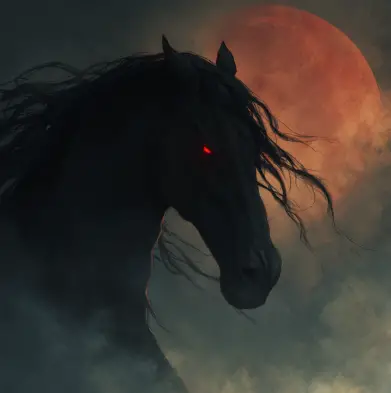 while herding cattle, shot down by bandits. His horse, wounded but fierce, carried his body back to town before collapsing. Buried together on a hill overlooking the river, their spirits fused into a single entity: a ghostly horse that thunders through the night, riderless yet purposeful. Sightings describe a massive equine shadow, its mane flowing like smoke, eyes glowing red against the moonlight. It appears during storms or full moons, racing along forgotten trails or near the international bridges. Riders hear phantom hoofbeats echoing from nowhere, sometimes accompanied by a mournful whinny that chills the blood. One modern twist involves motorists on a highway out of town, who report their engines stalling as the horse crosses their path, vanishing into the mist. In some versions, the phantom horse acts as a protector, guiding lost travelers or warning of impending danger like floods or ambushes. A story from the 1970s tells of a family whose car broke down; as coyotes approached, the horse appeared, scaring them off before fading away. Others see it as an omen of death, its appearance foretelling tragedy. The Phantom Horse symbolizes the enduring wildness of the border, where history’s echoes refuse to fade. In a city modernizing rapidly, it harkens to a romanticized past, blending nostalgia with the supernatural. Locals honor it in quiet rituals, leaving oats by riverbanks, ensuring the spirit’s restless journey continues.
Number Four: The Sorcerer’s Yellow Tomb.
Finally, we turn to a site of pilgrimage and mystery: the yellow tomb of the Sorcerer of Nuevo Laredo. Located in the municipal cemetery, this bright sepulcher belongs to Cipriano Tavares, a man who lived in the early 20th century and whose reputation as a healer and mystic has outlasted his mortal coil. Cipriano was no ordinary resident; born in the late 1800s, he practiced herbal medicine,  divination, and what some called brujería, or witchcraft. He cured ailments with potions, predicted fortunes, and allegedly warded off evil spirits. His death in the 1940s was shrouded in secrecy. Some say he passed from natural causes, others swear a curse from a rival struck him down. Buried in a vivid yellow tomb adorned with esoteric symbols like crosses, stars, and enigmatic carvings, it became a focal point for the faithful. Visitors flock here seeking miracles: love, health, or protection. They leave offerings—candles, coins, photos—and whisper petitions. Tales abound of granted wishes, but with caveats: one woman reportedly regained her sight after praying, only to lose a loved one soon after. The tomb’s color is said to glow unnaturally at night, and shadows move within, as if Cipriano’s spirit lingers, dispensing otherworldly aid. A chilling account involves a skeptic who mocked the site, only to suffer vivid nightmares of a dark hooded figure until he apologized. The symbols on the headstone are interpreted variably: some see Masonic influences, others indigenous glyphs. In border culture, where beliefs blend Catholicism with folk magic, the Nuevo Laredo Sorcerer represents empowerment amid uncertainty. This legend underscores faith’s power in unexplained realms. Whether charlatan or genuine magician, Cipriano’s tomb draws the desperate, proving that in Nuevo Laredo, magic endures beyond the grave.
In closing, these legends of Nuevo Laredo weave a narrative of a city alive with the unseen. They serve as mirrors to societal undercurrents: fear, hope, and the human need for stories that explain the inexplicable. As the Rio Grande flows eternally, so do these tales, inviting us to question what lurks just beyond the light. If you visit, listen closely; the borderlands have much to whisper.
REFERENCES
El Mañana de Nuevo Laredo. 2023. “Las leyendas urbanas más famosas de Nuevo Laredo.” October 31.
El Sol de Tampico. 2025. “La misteriosa tumba amarilla del ‘Brujo de Nuevo Laredo’: los visitantes aún buscan su poder.” October 24.