
Podcast: Play in new window | Download
Subscribe: Apple Podcasts | RSS
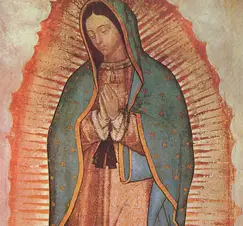 In the heart of Mexico’s rich tapestry of faith, history, and folklore, few figures loom as large as the Virgin of Guadalupe. Her original apparition in 1531 to San Juan Diego on Tepeyac Hill described in Mexico Unexplained Episode number three https://studio.youtube.com/video/RV7GTctpj1M/edit is a cornerstone of Mexican identity: a miraculous event where roses bloomed in winter, and her image imprinted itself on a humble cloak of cactus fibers called a “tilma,” converting millions and blending Indigenous and Catholic worlds. But the Virgin’s presence didn’t end there. Over the centuries, and especially in modern times, reports of her image appearing in unexpected places have captivated the nation of Mexico. These “apparitions” often manifest as stains, patterns, or shapes in everyday objects, sparking debates between believers who see divine signs and skeptics who point to pareidolia, a psychological phenomenon where the brain tends to find familiar forms in randomness. This phenomenon ties deeply into Mexico’s cultural soul, where devotion to the Virgin of Guadalupe transcends religion, becoming a symbol of hope, protection, and national unity. In a country marked by earthquakes, revolutions, and social upheavals, these sightings offer comfort, drawing crowds to pray, light candles, and seek miracles. Yet, they remain unexplained by science, fueling endless fascination. In this episode of Mexico Unexplained, we delve into five intriguing cases and apparition types from the late 20th and early 21st centuries, where the Virgin’s likeness emerged in urban settings, household items, and natural formations. Each story blends eyewitness accounts, media frenzy, and a touch of the supernatural, reminding us that in Mexico, the line between the ordinary and the divine is often blurred.
1: The Virgin of the Metro – The Subway Stain That Stopped a City
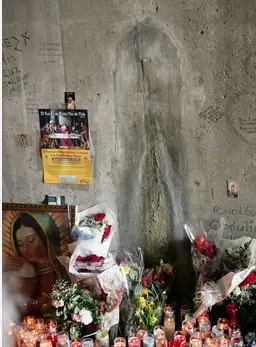 In the bustling underbelly of Mexico City, where millions commute daily through the labyrinthine Metro system, an ordinary water leak became an extraordinary event in June 1997. At the Hidalgo station—named after the revolutionary priest Miguel Hidalgo, who himself invoked the Virgin of Guadalupe during Mexico’s fight for independence—a dark stain formed on the tiled floor from persistent seepage and salt deposits. To the astonishment of passersby, the blotch bore an uncanny resemblance to the Virgin’s iconic silhouette: her flowing mantle, bowed head, and radiant aura. Word spread like wildfire through the city’s grapevine. Commuters paused their rushes, kneeling to pray amid the chaos of noisy trains and bustling crowds. Soon, hundreds gathered, transforming the station into an impromptu shrine. Candles flickered, flowers piled up, and pilgrims drank from the leaking water, believing it held healing powers. Local media dubbed it “The Virgin of the Metro,” and the frenzy drew attention even from international outlets. Eyewitnesses recounted profound experiences. One woman claimed her chronic pain vanished after gently touching the stain, while others saw it as a sign amid the city’s social woes of poverty, crime, and inequality. Authorities investigated, confirming the image resulted from natural water flow and mineral buildup, yet the devotion persisted. For over a decade, until the station’s renovation around 2007, a small altar remained, protected by glass. Scholars and anthropologists view it as part of a series of unofficial Guadalupe apparitions in the late 20th century, reflecting urban Mexico’s blend of faith and modernity. This case echoes the original tilma’s timeless durability, but in a gritty, contemporary setting. Skeptics argue it’s pareidolia amplified by cultural reverence, yet for believers, it’s proof the Virgin watches over even the most mundane corners of life. The Metro Virgin faded with time, but her story endures as a testament to how faith can emerge from the cracks—literally—in everyday existence.
2: The Tortilla Miracle – A Heavenly Imprint on Humble Food
Food holds almost sacred status in Mexican culture, from tamales at celebrations to tortillas as daily staples. So, when the Virgin of Guadalupe’s image appears burned into a favorite food item, it’s no small wonder. While similar sightings occur sporadically, a notable cluster emerged in the late 20th century, often in rural kitchens or urban homes. One vivid example hails from various reports 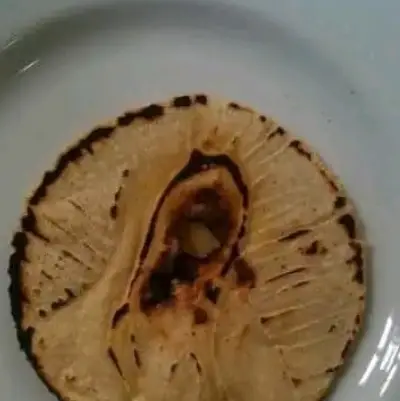 in states like Jalisco and Sinaloa, where housewives discovered the Virgin’s likeness in the char marks of freshly griddled tortillas. In well-documented instances, families preserved tortillas where burn patterns formed the Virgin’s mantle and pose. These events turn ordinary meals into relics. Families often encase them in glass, creating home altars that attract neighbors and media. One woman in Culiacán reportedly saw the image during Guadalupe’s feast day preparations, interpreting it as a blessing for her struggling household. These tortilla apparitions tie into broader folklore, where the Virgin’s presence in food symbolizes nourishment, both physical and spiritual. Skeptics cite the Maillard reaction, where heat creates random patterns, but believers counter with the timing: many appear near December 12, the feast day of Our Lady of Guadalupe. In one case, a tortilla was analyzed by local priests, who, while not endorsing it officially, allowed veneration. Social media amplifies these today, with photos going viral, drawing electronic online pilgrims. The phenomenon blends Indigenous reverence for corn – a staple crop since Olmec times – with Catholic iconography, much like the original apparition’s fusion. It’s a reminder that miracles can be as simple as breakfast, offering hope in poverty-stricken areas. Though not Church-approved, these stories foster community, with families sharing meals and prayers around the “blessed” tortilla.
3: Wall Stains and Humidity Ghosts – Domestic Divine Visitations
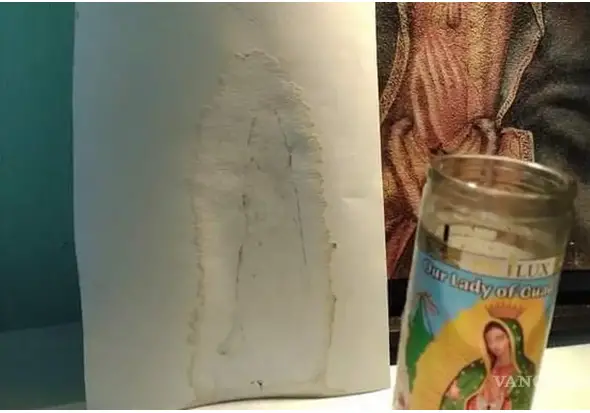 Homes in Mexico’s humid climates often battle mold and efflorescence, but sometimes these nuisances become supernatural. Wall stain apparitions of the Virgin of Guadalupe are common, with humidity or leaks forming her shape on bedroom walls or ceilings. A prominent example from the 2020s occurred in the states of Coahuila and Tabasco, where families reported silhouettes emerging just before Guadalupe’s festivities. In Saltillo, Coahuila, in 2023, a resident discovered a humidity outline on a sheet of paper against a wall, resembling the Virgin’s praying figure. It drew family and friends to pray, seeing it as protection during economic hardships. Similar cases in Tabasco involved mold patterns on concrete walls, interpreted as signs amid floods or personal crises. One family in Villahermosa claimed in local news outlets that the image faded after their prayers were answered, adding to the mystique. These domestic apparitions feel intimate, as if the Virgin visits the hearth. Cultural observers note parallels to the original tilma’s preservation against humidity, defying decay. Skeptics blame environmental factors—salt efflorescence creates crystalline shapes—but timing and emotional impact fuel belief. Churches often advise caution, yet communities build small shrines, fostering neighborhood unity. In a nation where faith is familial, these stains transform houses into holy sites, blending the profane with the sacred.
4: The Comal Griddle Revelation – Kitchen Fires and Celestial Signs
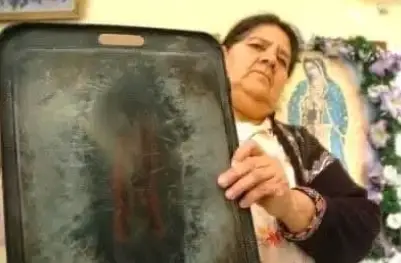 The comal, a traditional clay or metal griddle for cooking tortillas, has been the canvas for several Guadalupe sightings. Burn residues and heat marks sometimes form her image, as in a case from Sayulita, Jalisco which took place in the year 2000, where a cook noticed the Virgin’s outline after a busy day. Reports from border regions and interior towns describe families treating such comals as altars, refusing to clean them. One story involves a woman whose griddle “miracle” coincided with her child’s recovery from illness, spreading via word-of-mouth. These kitchen apparitions symbolize the Virgin’s role as nurturer, appearing in women’s domains. Heat chemistry explains patterns, but cultural context deep faith elevate them. They reinforce Guadalupe’s accessibility, turning chores into channels for grace.
5: Pavement and Parking Lot Phantoms – Urban Omens in Concrete
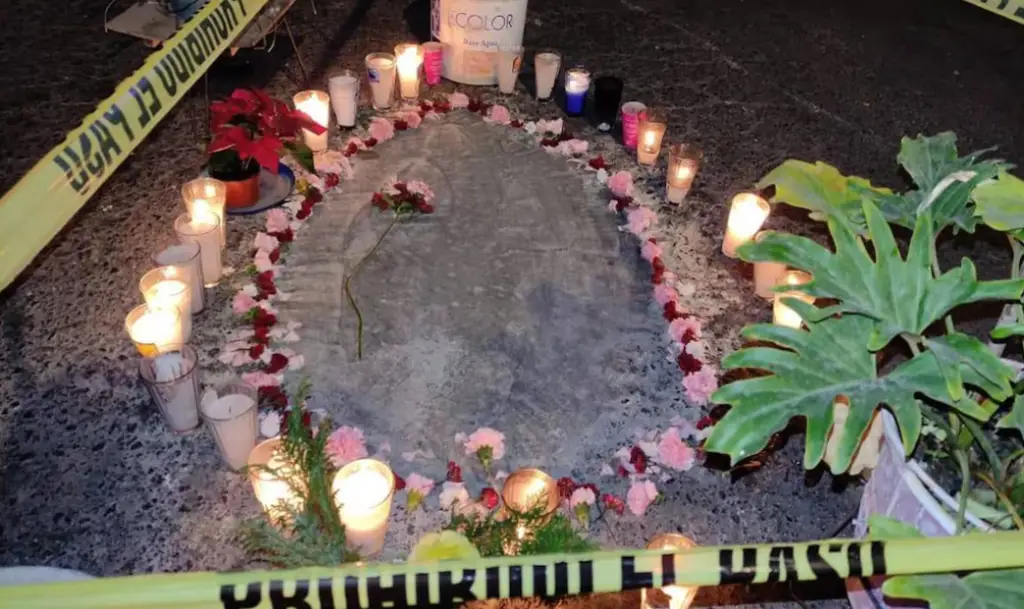 Urban Mexico’s infrastructure woes—potholes and cracks—have birthed apparitions too. In 2020, in the city of Nezahualcóyotl, in the Mexican state of México, a repaired pothole’s concrete formed the Virgin’s image, drawing Catholics to the site. Flocks gathered, placing flowers despite traffic. Similar stains under bridges or in parking lots turn everyday spaces sacred. These reflect Guadalupe’s protection over chaotic city life, with believers seeing her presence in the very pavement they walk on daily.
These five cases—from subways to sidewalks—illustrate how the Virgin of Guadalupe continues to “appear” in Mexico, bridging ancient miracle and modern mystery. Whether divine intervention or psychological projection, the apparitions underscore Our Lady’s role as comforter in turbulent times. In a secularizing world, such stories preserve cultural heritage, inspiring faith without official sanction. As Mexico evolves, expect more unexplained sightings, for Guadalupe remains eternally watchful.
REFERENCES
Brading, D. A. 2009. “Contexts for the Virgen del Metro, Mexico City 1997-2007.” Anales del Instituto de Investigaciones Estéticas 31, no. 95: 119–143.
Washington Post Staff. 1997. “‘Virgin of the Metro’ Draws Faithful Underground.” The Washington Post, June 9, 1997.