
Podcast: Play in new window | Download
Subscribe: Apple Podcasts | RSS
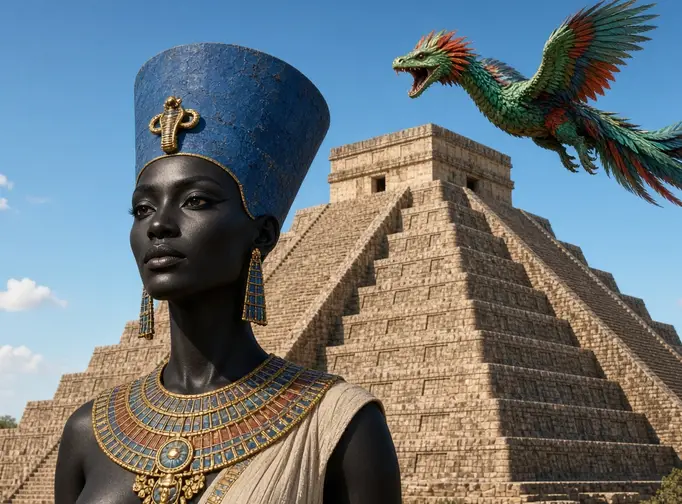 The Afrocentric claims that African-Americans are the true indigenous peoples of the Americas—and specifically that they founded or formed the core of Mesoamerican civilizations such as the Olmecs, Maya, and Aztecs—represent a strand of pseudohistory that has circulated for over a century and gained renewed visibility online, especially within the last 10 years. These ideas range from assertions of pre-Columbian African voyages that created or heavily influenced New World civilizations to broader arguments that the first peoples of the Americas were “Melanated” or Black populations who crossed via the Bering land bridge, or even earlier Atlantic routes, with little change in appearance, later being displaced or reclassified. Contemporary popular versions often assert that African-Americans themselves are indigenous rather than primarily the descendants of enslaved West and Central Africans brought after 1492.
What were some of the origins and developments of these claims? Speculation linking the Olmecs to Africa began almost immediately with modern discovery of their monumental art. In 1862, José María Melgar reported the first colossal head at Tres Zapotes and described its features as those of a “Negro race,” specifically Ethiopian. Similar comments appeared in late-19th-century Mexican scholarship. In the early 20th century, Harvard professor Leo Wiener’s three-volume Africa and the Discovery of America argued that Arabized Black West Africans often called “Moors” had reached the Americas centuries before Columbus and influenced Mexican civilizations, citing flimsy linguistic and cultural parallels. The modern popular form crystallized with Ivan Van Sertima’s 1976 bestseller They Came Before Columbus: The African Presence in Ancient America. Van Sertima, a Guyanese-born associate professor of Africana Studies at Rutgers, claimed that Nubians who ruled Egypt during the 25th Dynasty sailed to the Gulf Coast of Mexico around 700 BC, were accepted as demi-gods, were made rulers by the Olmecs, and essentially created or directed Olmec civilization; later contacts from Mali around 1300 AD were also alleged. The Olmec heads were presented as portraits of these Black super “warrior kings.” The book sold widely in African-American communities and was endorsed by some figures in the emerging Afrocentric movement formalized by Molefi Kete Asante in the 1980s. Afrocentrism itself drew on earlier Black nationalist and Pan-Africanist traditions such as the writings of Marcus Garvey and Cheikh Anta Diop’s work on Egypt. These traditions sought to center 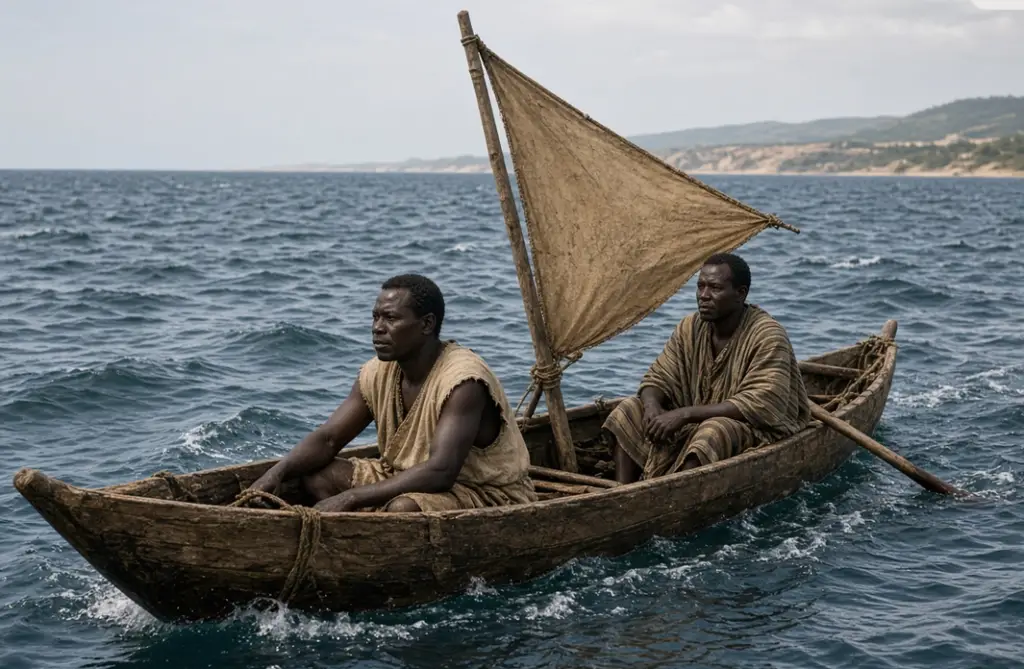 African agency and counteract narratives of African inferiority. Parallel claims held that the Americas were first peopled by “melanated” peoples migrating through Asia and across Beringia without major racial change articulated by writers such as Legrand H. Clegg II and Runoko Rashidi. Clyde Ahmad Winters has been a persistent proponent of the view that Mande speakers from West Africa founded Olmec civilization, introduced writing and calendrical systems, and left decipherable inscriptions on Olmec artifacts. He has published extensively claiming to have translated Olmec writing as Mande and linking them to later Maya culture. More recent online iterations, visible on YouTube and social media under labels such as “Native Black Ancestry” or “Black Indians,” often downplay or deny the scale of the transatlantic slave trade. They emphasize colonial-era racial reclassification, intermarriage with Native Americans, and selective genetic or documentary traces to argue that many or most African-Americans are indigenous to the Americas, sometimes extending this to Mesoamerican high cultures. Black Hebrew Israelite groups sometimes incorporate Native Americans into their claimed Israelite lineages, adding a religious dimension. These ideas are not mainstream in African-American scholarship or history; they exist alongside and sometimes in tension with the well-documented history of the slave trade, African cultural retentions, and the achievements of free and enslaved Africans in the Americas.
What are the claims based on? The core motivations are clear and understandable in context. Centuries of slavery, Jim Crow, and Eurocentric history that minimized African achievements created a demand for narratives of continuity, agency, and pride. Linking African-Americans directly to the monumental civilizations of Mexico and Central America offers a powerful counter to the image of Africans arriving only as chattel. Ocean currents, the existence of sophisticated West African polities such as the Mali Kingdom, and the desire to reject any implication of cultural dependence on Europeans or Asians all play roles. Hyperdiffusionist assumptions—that complex civilizations must have been imported rather than developed locally—are common to many alternative histories.
T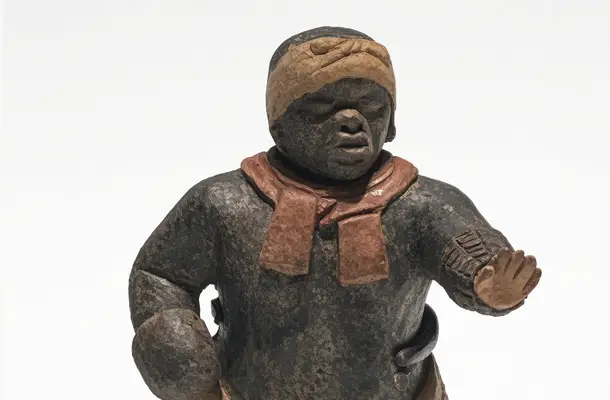 he supposed evidence to support all this is what academics would call, “problematic.” Proponents rely on several limited examples found in the archaeological record, among the most popular center around the Olmec heads. The colossal basalt heads discussed in Mexico Unexplained episode number 80 https://youtu.be/tMOhL84hkRU date mainly to the Early and Middle Formative, roughly 1200–400 BC. They show broad noses and full lips that are interpreted as stereotypically “Negroid.” Helmets or headdresses are sometimes read as African-style braids. In reality, the heads are highly stylized monumental sculptures, not realistic portraits. Similar facial proportions appear in the art of other tropical American groups and reflect local populations adapted to humid environments; Nubians and many East Africans actually have longer, narrower noses suited to drier climates. No controlled excavation has produced African-style artifacts, textiles, or technology at Olmec sites. Other popular ancient Mexican works cited as “proof” are the murals of Bonampak discussed in Mexico Unexplained episode number 147 https://youtu.be/c-f_rFAp21s Painted figures on the wall with a darker hue are labeled “melanated” or “African” and those wishing to see what they want to see claim that many of the people depicted have Caribbean-style Reggae dreadlocks. There are other relics and illustrations that make the list. Here and there, ancient artifacts pop up that are almost comically similar to modern-day African American entertainers or characters from Black popular culture. An ancient sculpture may look like American comedienne Wanda Sykes, while a jade mask from the Maya region looks eerily similar to Bill Cosby. Then there are the two Maya dwarf figurines that have gotten a lot of attention lately. One looks like America’s favorite pancake lady, Aunt Jemima, and the other one is simply labeled “Big Booty” by the Afrocentrics. These lookalikes can be chalked up to pareidolia, which is defined as
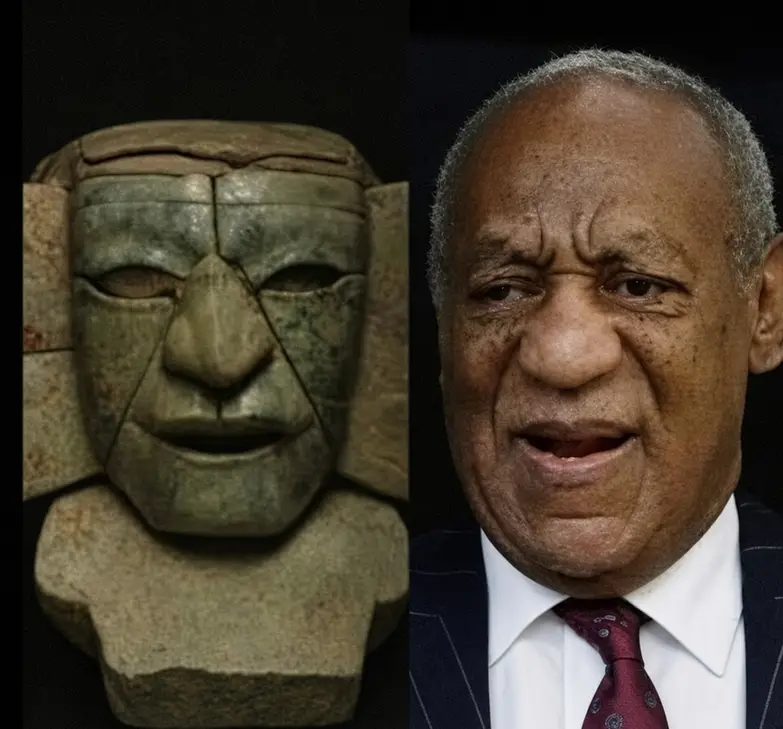 a psychological phenomenon where your brain perceives a specific, meaningful image, pattern, or face in random, vague, or ambiguous visual or auditory stimuli. In the age of AI there are some artifacts that are created out of nowhere or enhanced to look more “Negroid” to fit the narrative.
Several proponents of these fringe theories put forth linguistic and epigraphic claims. Winters and others assert that Olmec glyphs and later Maya writing derive from Mande scripts, and that they have successfully deciphered them. Mainstream epigraphers and linguists reject these readings, especially since most scholars assert that West African Mande scripts do not represent a formal writing system at all. Olmec writing remains only partially understood. Maya hieroglyphs were deciphered through internal evidence, bilingual texts, using modern local Maya speakers and through structural analysis without using African models. Claims of specific word borrowings or calendar systems lack peer-reviewed acceptance and similarities can be chalked up to chance or wishful thinking.
Others cite a variety of cultural parallels to make their claims. Pyramids, calendars, mummification practices, religious motifs – including serpents and felines – and metallurgy are claimed as hard evidence of diffusion. These are weak. Monumental architecture, calendrical astronomy, and complex religion arose independently in multiple regions: Egypt, Mesopotamia, the Indus valley, China, the Andes, Mesoamerica. Timing does not match. For example, Olmec civilization was already developing when the alleged Nubian contact is supposed to have occurred, and the heads predate the models proposed for them. No African plants, animals, or technologies appear in pre-Columbian American archaeological contexts in ways that require human transport. The often-cited bottle gourd and certain cotton genes reflect much earlier, non-human dispersals.
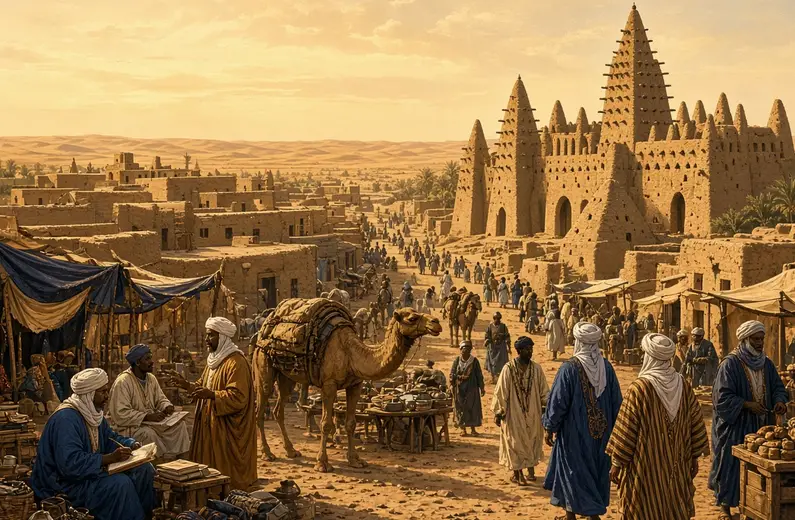
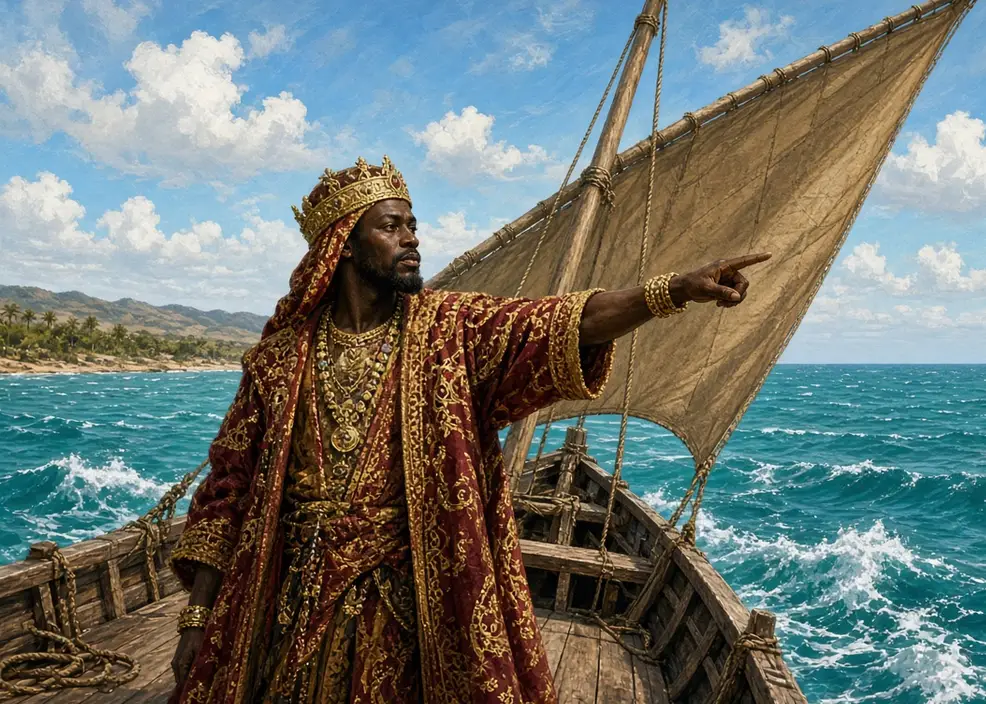
Some claim historical and legendary accounts to back up their theories. The alleged expedition of Mansa Abu Bakr II of Mali is frequently cited. The primary source is a second-hand report from the Arab historian al-Umari; it is not corroborated by archaeology or contemporary West African records of successful transatlantic return voyages. Ocean currents make accidental or deliberate crossings theoretically possible, but possibility is not evidence. No African civilization in prehistory had the boat technology to make this happen, though.
 There are some “scholars” who make assertions about skeletal evidence. Older claims sometimes cite cranial measurements or alleged “African” skeletons, such as the remains of “Luiza” in Brazil. Modern ancient DNA has been decisive. Mitochondrial DNA from Olmec-period individuals at San Lorenzo and related sites belongs to haplogroup A, one of the founding Native American lineages derived from Beringian/Siberian populations. African haplogroup L is utterly absent. Broader surveys of hundreds of pre-Columbian Mesoamerican burials show no African maternal lineages. Genome-wide data confirm that the peopling of the Americas occurred from northeast Asia beginning around 16,000–15,000 years ago with possible earlier pulses, followed by local diversification. There is no genetic signal of pre-Columbian sub-Saharan African ancestry in ancient American remains. Modern African-American genomes show predominantly West/Central African ancestry plus European and some Native American admixture dating to the colonial period which is exactly as expected from the transatlantic slave trade and subsequent history.
Scholarly evaluations by Mesoamerican specialists have systematically dismantled the claims: absence of artifacts, chronological mismatches, misidentification of phenotypes, and failure of diffusionist models under scrutiny. A 2020 journal article promoting a classroom lesson on “Black Olmecs” was retracted after peer review for lack of archaeological and genetic support. The consensus of archaeologists, geneticists, and historians specializing in Mesoamerica is unambiguous: the Olmec, Maya, Zapotec, and later Central Mexican civilizations developed indigenously from earlier Archaic and Formative populations of the Americas. The first Americans were not African or “melanated.” African-Americans are overwhelmingly the descendants of people forcibly transported from Africa between the 16th and 19th centuries, with variable but usually minority Native American and European ancestry acquired afterward.
 Many people laugh off these theories as another example of Black “We wuzzery,” but these Afrocentric claims have real costs. They appropriate the heritage of Indigenous American peoples, generating friction with Native communities who see their histories erased, dramatically altered or overwritten. They also distort African-American history by minimizing the documented realities of the slave trade, African cultural retentions, and the extraordinary resilience and creativity of Black communities under extreme conditions. Online amplification through videos, AI-generated images and social media has spread simplified or conspiratorial versions farther than the original academic-adjacent works of Van Sertima and Winters. Evidence-based history does not diminish African achievements. The kingdoms of West Africa, the sophisticated societies of the Sahel, or the cultural contributions of the African diaspora have their unique places in history. Evidence-based history simply requires distinguishing what the archaeological, genetic, linguistic, and documentary records actually support from what is projected onto them. The Olmec heads, for example, remain extraordinary works of early American art created by the ancestors of later Mesoamerican peoples, not evidence of a forgotten African colonization or a worldwide “Black Empire.” The unfortunate reality about these Afrocentric theories, though, is that they seem to be gaining traction and have gotten wider attention in the past few years. For those who wish to uphold the native genius that created the complex history in the ancient Americas, this trend is beyond troubling.