
Podcast: Play in new window | Download
Subscribe: Apple Podcasts | RSS
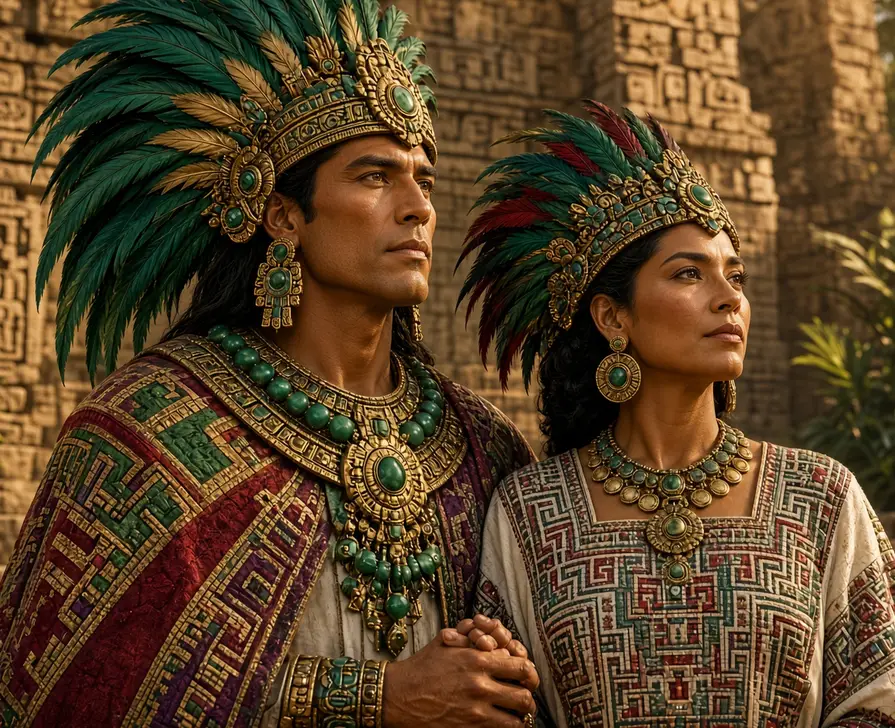
 Chimalpopoca was a king of Tenochtitlan, not an Aztec emperor. The distinction matters. He ruled a growing island city-state that still paid tribute to a more powerful neighbor. The imperial Aztec order that later dazzled the Spanish—the Triple Alliance of Tenochtitlan, Texcoco, and Tlacopan—took shape only after his death. His Nahuatl name, Chīmalpopōca, means “Smoking Shield.” The glyph that accompanied him in later pictorial manuscripts shows a war shield with curls of smoke rising from it, an image of battlefield dust and martial prestige. He was the third tlatoani (“speaker” or ruler) of the Mexica of Tenochtitlan, succeeding his father Huitzilihuitl around 1417 and dying in 1427. Most sources place his birth about 1397, making him roughly twenty at accession and thirty at death. Some chronicles give slightly different years—1415 or 1418 for the start of his reign—but the decade of his rule is clear.
The sources do not agree on every detail of his parentage. The majority tradition holds that he was the son of Huitzilihuitl and Ayauhcihuatl, a Tepanec princess and daughter of Tezozomoc, the long-reigning lord of Azcapotzalco. That maternal link made Chimalpopoca the favorite grandson of the most powerful man in the Basin of Mexico. Other accounts, including some early colonial interpretations of Mexica succession customs, make him a son of Acamapichtli, the first tlatoani of Tenochtitlan, and therefore a brother rather than a son of Huitzilihuitl. Gerónimo de Mendieta concluded that Huitzilihuitl, Chimalpopoca, and the later ruler Itzcoatl were all brothers. He was also a half-brother of the future Montezuma I known in Nahuatl as Motecuhzoma Ilhuicamina.
These discrepancies reflect both the limitations of the surviving records and the political uses of genealogy. Mexica succession was not strictly primogeniture, meaning first son following father, or closest male heir assuming control. A council of nobles chose the tlatoani from among eligible members of the royal lineage, weighing military reputation, political connections, and, in Chimalpopoca’s case, the advantage of Tepanec blood. His youth at accession—some sources even claim he was a child—suggests that the choice was as much about cementing the alliance with Azcapotzalco as about personal merit. He married Matlalatzin (also called Aztaxochitl in some texts), a noblewoman from Tlatelolco whose own family ties reached back to Tezozomoc. He had several children; one son, Tezozomoc, later ruled Ecatepec. Another son, sometimes named Xihuitl Temoc or Teuctlehuac, briefly succeeded him for about sixty days before dying.
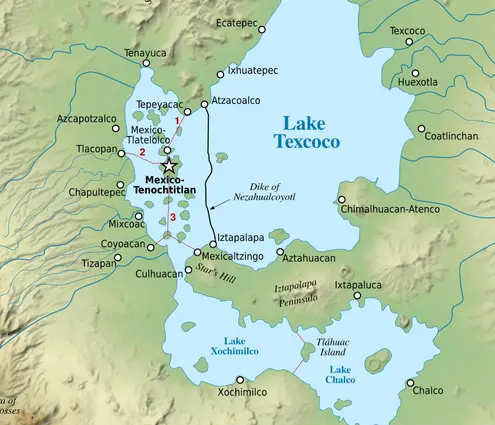
 When Chimalpopoca took power, Tenochtitlan was not the capital of an empire. It was a prosperous but subordinate altepetl, or city-state, on an island in Lake Texcoco. The Mexica paid tribute and military service to Azcapotzalco, the Tepanec capital on the western shore of the lake. Tezozomoc had built a system of interlocking alliances and tribute states that dominated much of the Basin. Tenochtitlan’s earlier rulers, Acamapichtli and Huitzilihuitl, had accepted that relationship while quietly strengthening their own city through marriage alliances and participation in Tepanec wars.
Chimalpopoca continued that policy. His most important early military contribution came in 1418, when Tezozomoc made war on Ixtlilxochitl I, King of Texcoco. Mexica forces supported the Tepanecs. After the victory, Texcoco was granted to Tenochtitlan as a tributary. Chimalpopoca then interceded for the young prince Nezahualcoyotl, who had fled into the mountains (for more on Nezahualcoyotl, please see Mexico Unexplained episode number 270: https://youtu.be/_6pq0Fw4sf0 ). Tezozomoc allowed the exile to live under Mexica protection in Tenochtitlan rather than be hunted down. That act of clemency would later prove fateful: Nezahualcoyotl became one of the architects of the alliance that destroyed Tepanec power.
The tlatoani also oversaw infrastructure that bound Tenochtitlan more tightly to the mainland and improved daily life on the island. With Tezozomoc’s assistance he began a wooden aqueduct to bring fresh water from the springs of Chapultepec; earlier attempts had failed or proved inadequate. He constructed a causeway to Tlacopan (Tacuba) that 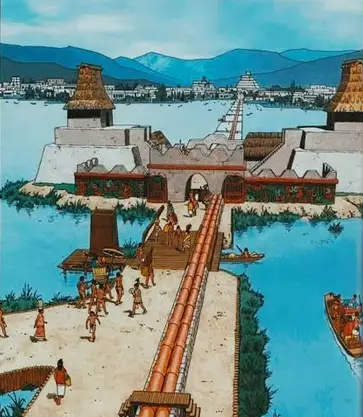 included openings spanned by wooden bridges removed at night for security. He dedicated a sacrificial stone in the Tlacocomoco quarter of the city. Sources also credit him with the conquest of Tequizquiac and mention conflict with Chalco. These were modest expansions compared with the later imperial campaigns, but they show a ruler attending to both the physical needs of a growing population and the ritual obligations of Mexica kingship.
Tenochtitlan remained a junior partner. Tribute still flowed to Azcapotzalco. Mexica warriors fought in Tepanec armies. The city’s independence was real in local administration and religious life, yet it existed inside a larger Tepanec political order. Calling Chimalpopoca an “Aztec emperor” therefore projects later realities backward. The title huey tlatoani (“great speaker” or supreme ruler) and the imperial structure it implied belonged to the period after 1428.
The system that had protected Chimalpopoca collapsed with Tezozomoc’s death in 1426. The old lord had designated his son Tayauh, also known as Tayatzin, as successor. Maxtla, another son who ruled Coyoacan, seized the throne of Azcapotzalco. Chimalpopoca and Tlacateotl, the ruler of neighboring Tlatelolco, supported the designated heir. That choice cost them their lives.
The sources disagree on the precise manner of Chimalpopoca’s death, a sign that the event was immediately politicized. Some accounts say Tepanec soldiers entered his palace at night and killed him. Others describe capture, public humiliation, imprisonment in a wooden cage, and suicide by hanging. The Codex Mexicanus shows him with a rope around his neck. The Anales de Cuauhtitlan speak of him being dragged through the streets. Ixtlilxochitl and the Codex Xolotl place him in a cage on Maxtla’s orders. A few later interpretations suggest that Itzcoatl, who succeeded him, may have had a hand in removing both Chimalpopoca and the latter’s young heir so that the succession would pass outside the direct line. Whatever the exact sequence, by 1427 the third tlatoani of Tenochtitlan was dead and Maxtla, king of the mainland Azcapotzalco, had increased the tribute demanded from the island city.
 Maxtla named Itzcoatl, an older member of the Mexica royal house (half-brother or uncle to Chimalpopoca, depending on the genealogy), as the new tlatoani (for more information on Itzcoatl, please see Mexico Unexplained episode number 400 https://youtu.be/hJeS2Al8G9U ). Itzcoatl did not remain a compliant vassal. He allied with Nezahualcoyotl, now restored in Texcoco, and Totoquihuatzin of Tlacopan. In 1428 their combined forces defeated Maxtla and destroyed Azcapotzalco’s monopoly on power in the Basin of Mexico. The three cities formalized the Triple Alliance. Tribute that had once gone to the Tepanecs now flowed to the new partners, with Tenochtitlan rapidly emerging as the dominant military power.
Only from Itzcoatl onward can one reasonably speak of Aztec emperors in the conventional sense. Later rulers assumed the grander title huey tlatoani to mark their preeminence within the alliance. By the time of Ahuitzotl and Moctezuma II the ruler of Tenochtitlan stood at the head of a vast tributary empire stretching from the Gulf to the Pacific. Chimalpopoca never occupied that position. He was a king of one city-state inside another people’s empire.
Chimalpopoca’s reign occupies a hinge in Mexica history. Under him Tenochtitlan completed important public works, gained new tributaries through Tepanec wars, and maintained the marriage and kinship ties that had allowed a relatively recent immigrant group to flourish. His death removed the last Mexica ruler who accepted Tepanec overlordship as the natural order. The violence that followed created the opening for a new political architecture. Later Aztec historians writing after the Spanish conquest sometimes treated him as a martyr or as a ruler whose fate illustrated the dangers of misplaced loyalty. Pictorial manuscripts such as the Codex Mendoza and Codex Tovar preserve his name glyph and seated portrait in the conventional style of tlatoque: reed mat, turquoise diadem, speech scroll. Those images freeze him as a legitimate king, yet they sit inside histories written by people who already lived in the imperial world he never saw.
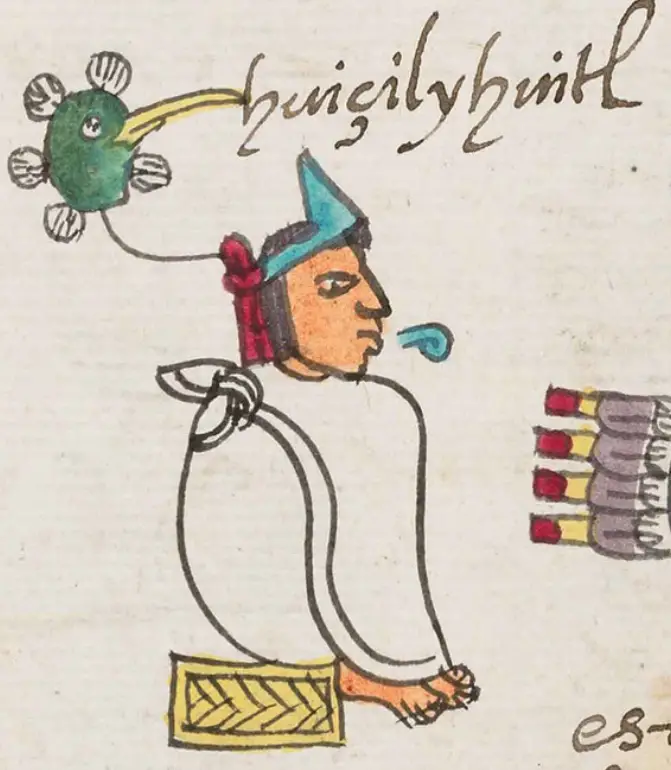 Modern scholarship treats him as a transitional figure. He was neither the founder of Mexica power nor its imperial culmination. He governed during the last years in which Tenochtitlan’s prosperity still depended on the favor of Azcapotzalco. The aqueduct, the causeway, the protection extended to Nezahualcoyotl, and the fatal decision to back the losing Tepanec prince all belong to that intermediate moment. The popular habit of calling every Mexica tlatoani an “Aztec emperor” flattens this chronology. Acamapichtli, Huitzilihuitl, and Chimalpopoca were kings of Tenochtitlan. Itzcoatl and his successors became something more: senior partners in a military and tributary alliance that historians later labeled the Aztec Empire. Chimalpopoca’s short life and violent end helped produce that transformation, even though he himself never wore the larger title. His story also illustrates how incomplete the written record remains. Dates shift by a year or two from source to source. Parentage is contested. The exact circumstances of his death exist in several incompatible versions. What survives is enough to locate him firmly in the political landscape of the early fifteenth-century Basin of Mexico: a young ruler bound by kinship to the Tepanec overlord, responsible for the material improvement of his island city, and ultimately destroyed by the succession struggle that ended Tepanec supremacy. In that sense he was exactly what the sources first call him—a tlatoani of Tenochtitlan, a king whose reign closed one chapter of Mexica history and, through its abrupt conclusion, opened another.
REFERENCES