
Podcast: Play in new window | Download
Subscribe: Apple Podcasts | RSS
 The Zimmermann Telegram stands as one of the most consequential diplomatic documents of the twentieth century. Sent in January 1917 by German Foreign Secretary Arthur Zimmermann, this coded message proposed a military alliance between Germany and Mexico in the event that the United States entered World War I against Germany. In return, Germany offered Mexico generous financial support and the opportunity to reclaim the territories of Texas, New Mexico, and Arizona lost in the Mexican War of 1846 to 1848. The telegram also suggested that Mexico invite Japan to join the alliance. Intercepted and decrypted by British naval intelligence, then shared with the American government, its public revelation in March 1917 ignited widespread outrage across the United States. Combined with Germany’s resumption of unrestricted submarine warfare, the telegram helped propel the United States into the war on April 6, 1917, decisively altering the course of the conflict.
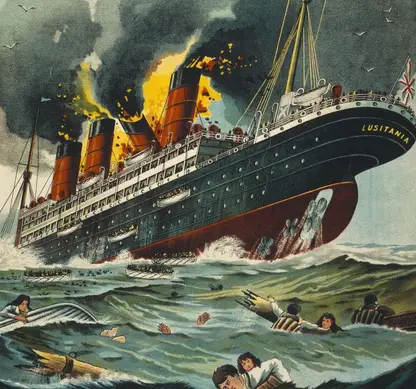
World War I erupted in Europe in the summer of 1914. From the outset, President Woodrow Wilson sought to keep the United States neutral, a policy that reflected the preferences of much of the American public and aligned with his 1916 re-election slogan that he had “kept us out of war.” Neutrality, however, proved increasingly difficult to maintain. Germany’s use of submarines against Allied shipping repeatedly endangered American lives and property. The sinking of the British liner Lusitania in May 1915, which killed 128 Americans, provoked intense anger, as did the attack on the French steamer Sussex in 1916. Germany temporarily restrained its U-boat campaign under the Sussex Pledge, but by late 1916 German military leaders, facing a grinding stalemate on the Western Front and the effects of the British naval blockade, decided that only unrestricted submarine warfare could starve Britain into submission before American intervention could tip the balance.
At a conference at Pless Castle on January 9, 1917, German leaders approved the resumption of unrestricted submarine attacks beginning February 1. They recognized that this policy would almost certainly bring the United States into the war. To offset that risk, German strategists looked south. Relations between the United States and Mexico were already strained. After the Mexican Revolution, the United States had intervened at Veracruz in 1914, pursued Pancho Villa after his 1916 raid on Columbus, New Mexico, and maintained a military presence under General John J. Pershing. President Venustiano Carranza’s government appeared open to German overtures. Earlier German efforts had included financial support for various Mexican factions and sabotage operations inside the United States. The Zimmermann Telegram formalized these ideas into a concrete proposal designed to divert American attention and resources.
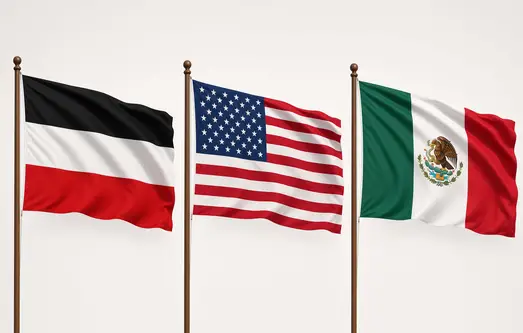
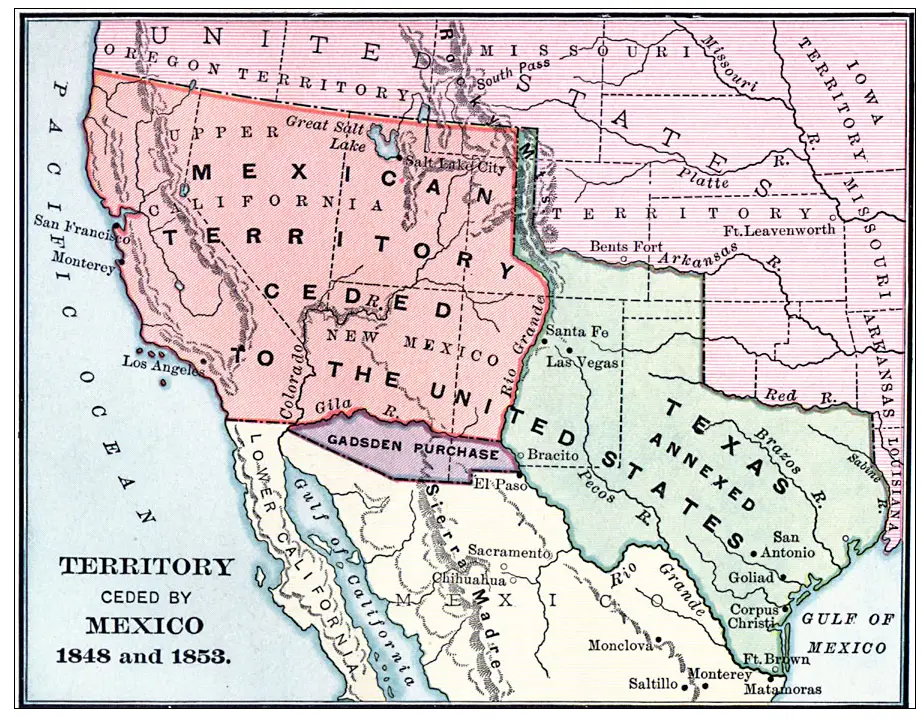 On January 16, 1917, Zimmermann dispatched the telegram from Berlin to the German ambassador in Washington, Count Johann von Bernstorff, with instructions to forward it to Heinrich von Eckardt, the German minister in Mexico City. The message read, in its widely published English translation: “We intend to begin on the first of February unrestricted submarine warfare. We shall endeavor in spite of this to keep the United States of America neutral. In the event of this not succeeding, we make Mexico a proposal of alliance on the following basis: make war together, make peace together, generous financial support and an understanding on our part that Mexico is to reconquer the lost territory in Texas, New Mexico, and Arizona. The settlement in detail is left to you. You will inform the President of the above most secretly as soon as the outbreak of war with the United States of America is certain and add the suggestion that he should, on his own initiative, invite Japan to immediate adherence and at the same time mediate between Japan and ourselves. Please call the President’s attention to the fact that the ruthless employment of our submarines now offers the prospect of compelling England in a few months to make peace.” Signed, Zimmermann.
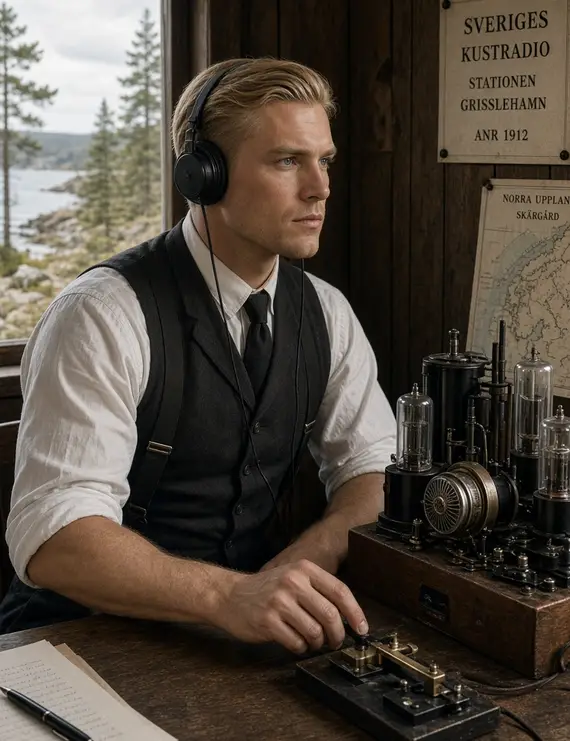
 Because Britain had cut Germany’s transatlantic cables at the start of the war, German diplomatic traffic had to travel by alternative routes, including radio and cables belonging to neutral countries. One version of the telegram passed through the American embassy in Berlin under an arrangement that allowed Germany limited use of U.S. diplomatic channels for communications related to peace efforts. Another route involved Swedish channels. All such traffic crossed British-controlled lines or was otherwise vulnerable to interception. British naval intelligence, operating from a secret unit known as Room 40 in the Admiralty building in London, routinely monitored these messages.
Room 40 had already achieved remarkable success in breaking German codes. Cryptanalysts Nigel de Grey and William Montgomery partially decrypted the telegram within a day of its interception on January 16. The message used an older diplomatic code, 13040, which Room 40 had been reconstructing for months with the help of captured codebooks and earlier intercepts. Full decryption took additional time, but by early February the British possessed a clear understanding of its contents. Admiral William Reginald Hall, the director of naval intelligence, recognized the telegram’s enormous propaganda value yet faced a dilemma: revealing it risked exposing Britain’s codebreaking capabilities and sources. To protect those secrets, the British carefully managed the disclosure. They obtained a copy of the retransmitted version from Mexico (sent in a weaker code) and prepared a cover story claiming the message had been obtained through commercial channels or agents in Mexico.
 On February 24, 1917, British Foreign Secretary Arthur Balfour handed the decrypted text, along with the original coded version and a translation, to Walter Hines Page, the U.S. ambassador in London. Page immediately forwarded it to Washington. President Wilson was shocked both by the contents and by the fact that Germany had exploited American diplomatic facilities to transmit the message. He initially delayed publication while seeking verification. Meanwhile, Germany had already announced unrestricted submarine warfare on January 31, prompting the United States to sever diplomatic relations on February 3. Several American ships were soon sunk. On March 1, the State Department released the telegram to the press. Newspapers across the country carried banner headlines. Public reaction was intense. Many Americans viewed the proposal as a direct threat to national territory and sovereignty. Skeptics, including some German-American and anti-interventionist voices, initially dismissed it as a British forgery. Those doubts evaporated when Zimmermann himself confirmed the telegram’s authenticity at a press conference on March 3, stating simply, “I cannot deny it. It is true.” He later defended the action in the Reichstag as a legitimate defensive measure.
In Mexico, the proposal received careful but ultimately negative consideration. Carranza appointed a military commission that concluded the plan was impractical. Mexico was still recovering from revolutionary turmoil, lacked the military capacity to challenge the United States successfully, and could not reliably count on German financial or material support. Accepting the alliance risked further American intervention and offered little realistic chance of recovering the southwestern territories. Mexico therefore remained neutral. The United States, for its part, moved to stabilize relations by withdrawing remaining troops and extending formal recognition to Carranza’s government later in 1917.
The telegram’s impact inside the United States was profound. It transformed abstract debates about distant European fighting into a concrete sense of national peril, particularly in the South and West, regions previously less engaged with the war. While unrestricted submarine warfare alone had already strained neutrality, the Zimmermann Telegram supplied vivid evidence of German hostility directed at American soil. Wilson requested authority to arm merchant ships; when Senate filibusters blocked legislation, he acted under existing powers. Further sinkings of American vessels in mid-March solidified cabinet support for war. On April 2, 1917, Wilson addressed a joint session of Congress, describing German actions, including the telegram, as acts of war and calling for a declaration to make the world “safe for democracy.” Congress approved the resolution: the Senate on April 4 by a vote of 82 to 6, the House on April 6 by 373 to 50. The United States formally entered World War I that day.
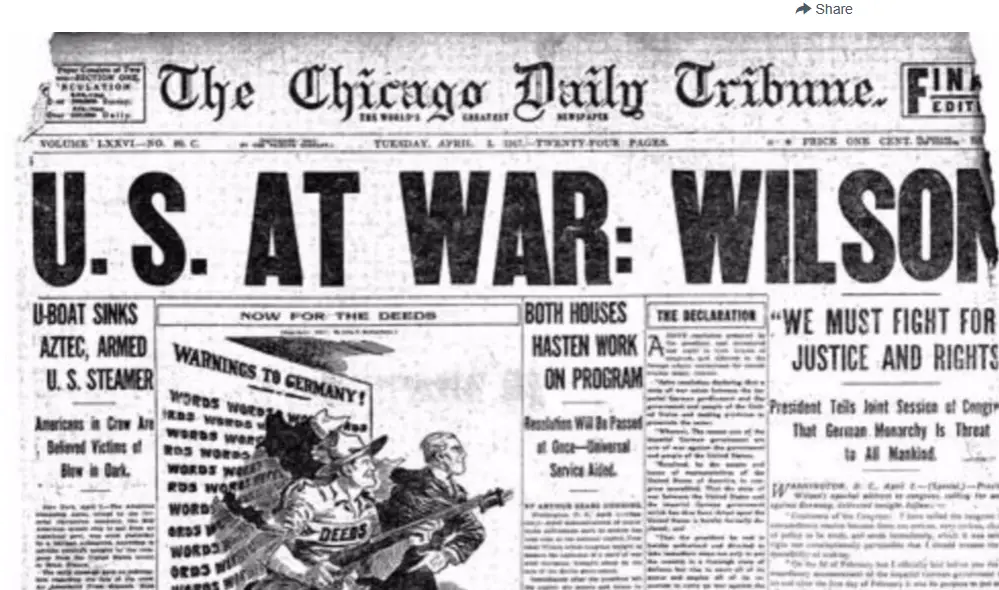 Historians generally agree that American entry was likely inevitable given the submarine campaign, yet the telegram accelerated the process and broadened popular support. It remains celebrated as one of Britain’s greatest intelligence successes of the war and an early demonstration of the strategic power of signals intelligence. The episode illustrated both the vulnerabilities of wartime communications and the decisive role that intercepted information can play in shaping public opinion and policy. Zimmermann resigned as foreign secretary in August 1917. The United States ultimately contributed more than two million troops to the Allied cause; American economic and military power helped tip the balance toward victory in 1918.
More than a century later, the Zimmermann Telegram endures as a classic case study in diplomacy, intelligence, and the unintended consequences of secret communications. A single coded message, intended to divert American power, instead helped summon it into the European conflict with lasting global repercussions. Its story underscores how the interception and revelation of private correspondence can reshape the course of history.
REFERENCES