
Podcast: Play in new window | Download
Subscribe: Apple Podcasts | RSS
 In the early morning of February 7, 1967, residents of a quiet ejido outside the town of General Terán, Nuevo León, heard two or three sharp explosions. Looking up, they watched a metallic sphere wrapped in smoke and fire descend toward the west. It struck the ground roughly a mile from the village, grazing tree branches before coming to rest atop a beehive. The air smelled strongly of gunpowder. For a few hours, no one approached. Whatever had fallen was still too hot, or the fumes too thick. Eight days later, a formal report recorded the accounts. Neighbors described a buzzing sound and mentioned a second, smaller fragment that landed in a nearby pasture and was never recovered. The original Spanish document has not surfaced; what survives is an English translation prepared by the U.S. Consulate in Monterrey and forwarded to Washington.
On February 12, a local man named Reyes Perales Pérez stumbled upon the object. It was a metal sphere roughly 2 feet across and about 66 pounds, made of an alloy no one in the area recognized. Three municipal officials—the secretary, the second commander, and the traffic chief—examined it. They rolled it about 40 yards to a dirt road, loaded it onto a cart, and brought it into town. Someone removed three small screws. No one yet knew what they held. For four days the sphere belonged to the municipality. The municipal president, engineer Plutarco Saínz, did not keep it. On February 16 he sent it to Monterrey with a routine note to the governor’s private secretary “for the appropriate action.” A small town had done what procedure required: document, sign, and hand over. From that moment the object ceased to be a local curiosity. That same day the state government telephoned not Mexico City but the U.S. Consulate in Monterrey. An unidentified object had fallen in General Terán. The consulate’s legal officer arrived too late; the sphere was already en route to the capital of the state. Washington’s first assessment, sent within hours, was cautious: “very probably part of a space vehicle.” NASA offered to examine it or dispatch an expert. On February 17, consular officers saw it in state offices: bronze-colored, hard metal, burn marks, two halves welded together, a threaded hole on each side, empty inside. It was slightly smaller than the object witnesses had described falling. The consulate asked to ship it to Washington. State authorities preferred the University of Nuevo León’s School of Engineering, but agreed to release it on the condition that it return afterward. The consul noted that if Mexico wanted to keep the object, a negotiation might be possible.
That evening an order arrived from Mexico City and the arrangement collapsed. A priority telegram marked “Confidential” went to Washington at 10:25 p.m. Acting on what state officials described as instructions from the Secretariat of the Interior, they demanded the sphere back. They promised it would remain intact until NASA could inspect it. The consulate complied. A second paragraph, based on a confidential source inside the state government, reported that Mexico City officials were angry the object had been shown to Americans and intended to send a  representative to take it to the capital. The newspaper El Norte published the news the same day: the object was now at the disposal of the Mexican government and would be studied in Mexico City. Luis Echeverría Álvarez was Secretary of the Interior at the time and three years later he would be elected president. On February 20 the U.S. ambassador reported a conversation with Echeverría: the sphere was under the custody of the university’s engineering school, and Mexico would be pleased if NASA experts examined it together with Mexican counterparts. Echeverría did not say whether it would be returned or to whom it belonged. He said Mexico would be present when it was opened. Washington sent NASA engineer Leo Abernethy to Monterrey and asked to be notified if the fragment moved. On March 1 the embassy reported that, according to Echeverría, the sphere had been transferred to Mexico City. A note in Washington directed an advance copy to the White House.
By March 6 the sphere was no longer at the university. It sat in the office of the director of the National Arsenal of the Secretariat of National Defense. Abernethy examined it with an embassy officer and a Mexican scientist identified in the cables only as Doctor De la Rosa. The conclusion was brief and definite: a spherical titanium tank manufactured in the United States for storing gas, almost certainly from the upper stage of a Titan 3C rocket launched by the Department of Defense. The rocket had re-entered on February 7 after placing seven communications satellites in orbit—the same day as the explosions over the ejido. It was American military hardware, not Soviet and not extraterrestrial. Abernethy flew home with his report the next day. The technical identity was settled for Washington. The political and physical custody of the object was not. Mexico did not release it. The context was Project Moon Dust, a joint State–Defense effort to recover space debris that fell outside U.S. territory. In the mid-1960s both superpowers were lofting hardware that regularly returned to Earth in pieces. A tank, a nozzle, a fragment of heat shield could reveal the performance of a rival’s launch vehicle or the vulnerability of one’s own. Cables from the period, later photographed at the National Archives and later posted online, document the recovery of such material from several countries. In the Mexican series the phrase “Moon Dust” itself does not appear; the object is simply called a space fragment. Its intended destination, however, was the same: a technical intelligence division of the Air Force.
On March 9 the US Department of State instructed the embassy to request formal return of the fragment, now identified as American. The scientific value of further analysis, an internal note cautioned, did not justify undue pressure. What mattered more was establishing the principle that U.S. property that falls in another country is returned, and establishing an orderly procedure for doing so. NASA would then turn this alleged tank over to the Department of Defense. A formal diplomatic note followed on March 14. March ended. April passed. On April 11 the Air Force already had routing instructions for the sphere. It was still in Mexico.
On the morning of May 19, 1967—74 days after NASA’s identification—the sphere was delivered to U.S. custody. Mexico provided a formal act of delivery. Quoted in English in the embassy cable, the act attributed the delay to “study and analysis ordered by higher authority.” According to the embassy that study consisted of roughly fifteen test perforations and the cutting of one section. Who ordered the work—Defense, Interior, or someone higher—is not stated. The Mexican act itself is not in the U.S. file. What was being sought, and what became of the excised piece, is likewise unrecorded. The Mexicans were experimenting on the sphere because they did not buy the official story.
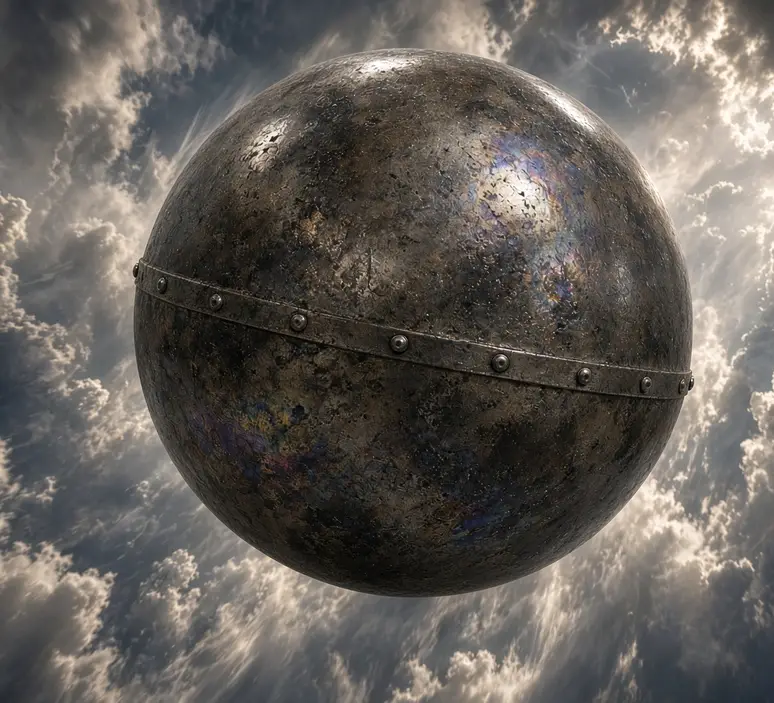 The next day an air attaché flew the packaged sphere to Kelly Air Force Base in Texas and onward to the Foreign Technology Division at Wright-Patterson Air Force Base in Ohio. The final line of the cable instructed that NASA and the Defense Intelligence Agency be notified. The story did not end. On July 13 another sphere, described locally as a satellite or similar object, fell near Chilón, Chiapas. The embassy notified Mexican authorities informally and admitted it could not verify the report. Three weeks later National Defense informed the U.S. attaché that Mexican artillery officers were examining a sphere measuring 2 feet across. On August 7 the attaché inspected it and identified it as another American titanium gas tank. Mexican military personnel had already cut a section and made several perforations. Defense said it would later report the method of return. In the surviving papers the Chiapas sphere simply disappears from the record: still in Mexican military hands, opened, incomplete, and awaiting a procedure that was never recorded. Two nearly identical tanks in five months; both times Mexican authorities examined and altered them before any American inspection.
Almost everything known about the General Terán sphere comes from the American cables. The Mexican side is largely missing: the original municipal record in Spanish, the full delivery certificate, the report on the perforations, the complete name and affiliation of the scientist De la Rosa, and the written order from the Mexican Department of the Interior. Those documents, if they still exist, should reside in the Foreign Ministry, the General Archive of the Nation, National Defense, or the archives of Nuevo León. In the dusty town of General Terán a handful of teachers and officials signed a paper recording what they saw, with some accounts of the differing from what was officially reported. Fifty-nine years later that local record remains the clearest Mexican document in the entire affair.
At the time, no one outside a small circle of officials knew with certainty what the sphere was. Villagers called the falling object strange; some later accounts labeled it a UFO. Many claimed that the object they saw fall from the sky was much larger than the supposed sphere recovered. Newspaper stories in Monterrey still occasionally revive the episode under the UFO heading, even while putting forth the official conclusion that it was space debris. Researchers who have studied Mexican cases of the period have treated the tanks as orbital junk since the 1990s. Alternative explanations persist at the margins: that Moon Dust was a cover for recovering something else, or that the CIA or the military quietly removed the object. The official cables show the opposite: the sphere was examined, identified, and ultimately delivered, albeit late and incomplete. A second-hand anecdote that Echeverría, years later, claimed to have seen a UFO during a 1965 blackout in Cuernavaca has circulated, but nothing in the 1967 file links that story to the handling of the tank or his collaboration with the Americans. Pulp Mexican UFO magazines in the 1970s covered the story with skepticism of the official narrative and even claimed that the first person who encountered the first sphere disappeared mysteriously.
What remains unresolved is narrower and more concrete. Why did Mexican authorities hold the sphere for 74 days after its identity was established? What prompted the order to perforate the metal and cut a section? What, if anything, did those tests reveal? Where is the missing piece? The American side wanted a clear precedent that its hardware would be returned. Mexico, for reasons still undocumented, wanted to look first. What it saw—and whether that inspection changed anything—is not in the papers that have so far been found. The technical identification of the spheres is no longer in serious doubt to those who accept the official story. The motives, the missing fragment, and the full Mexican record are. In that narrower sense the sphere of General Terán is still an open file.